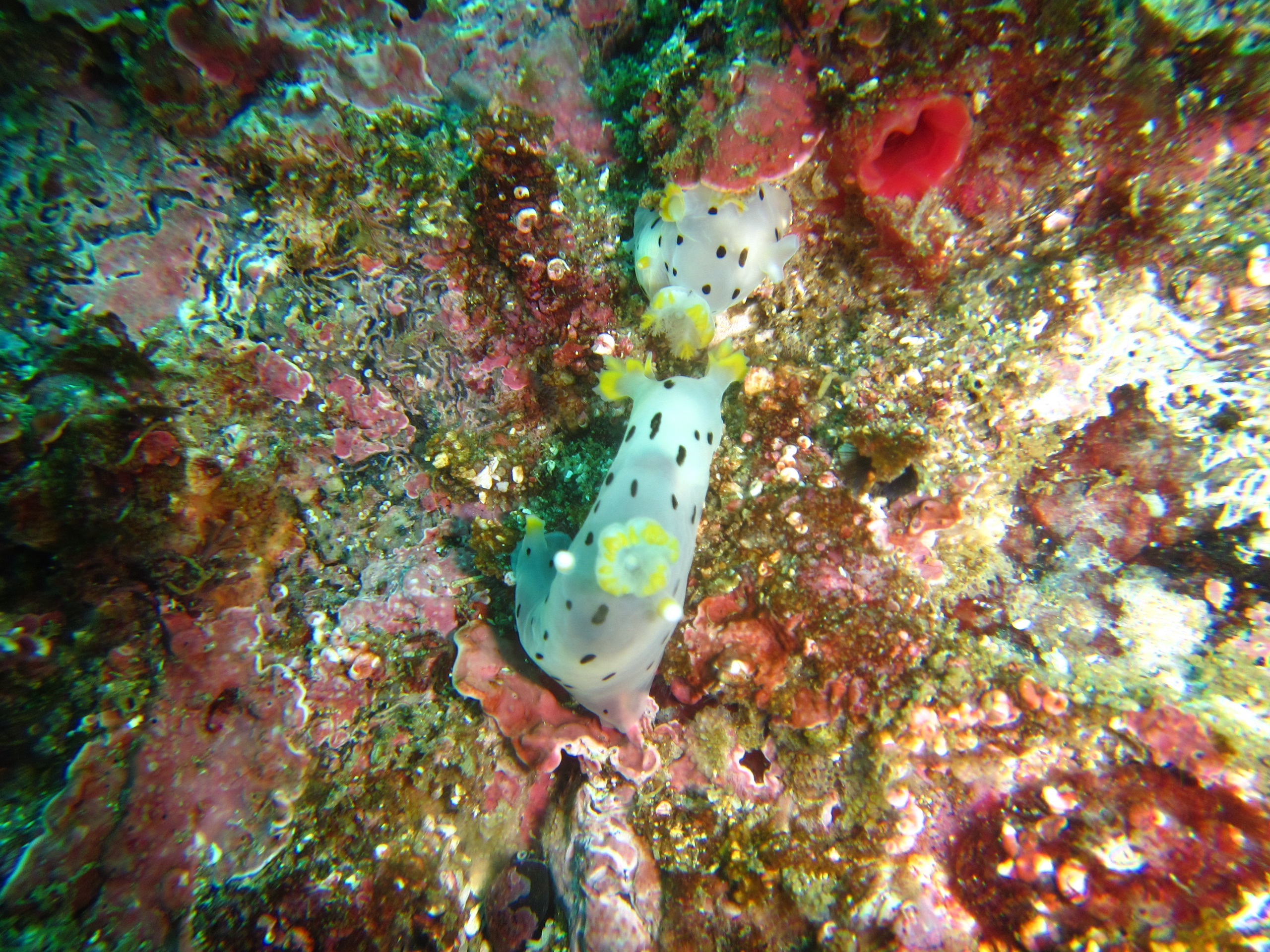
Dalmatian sea slug
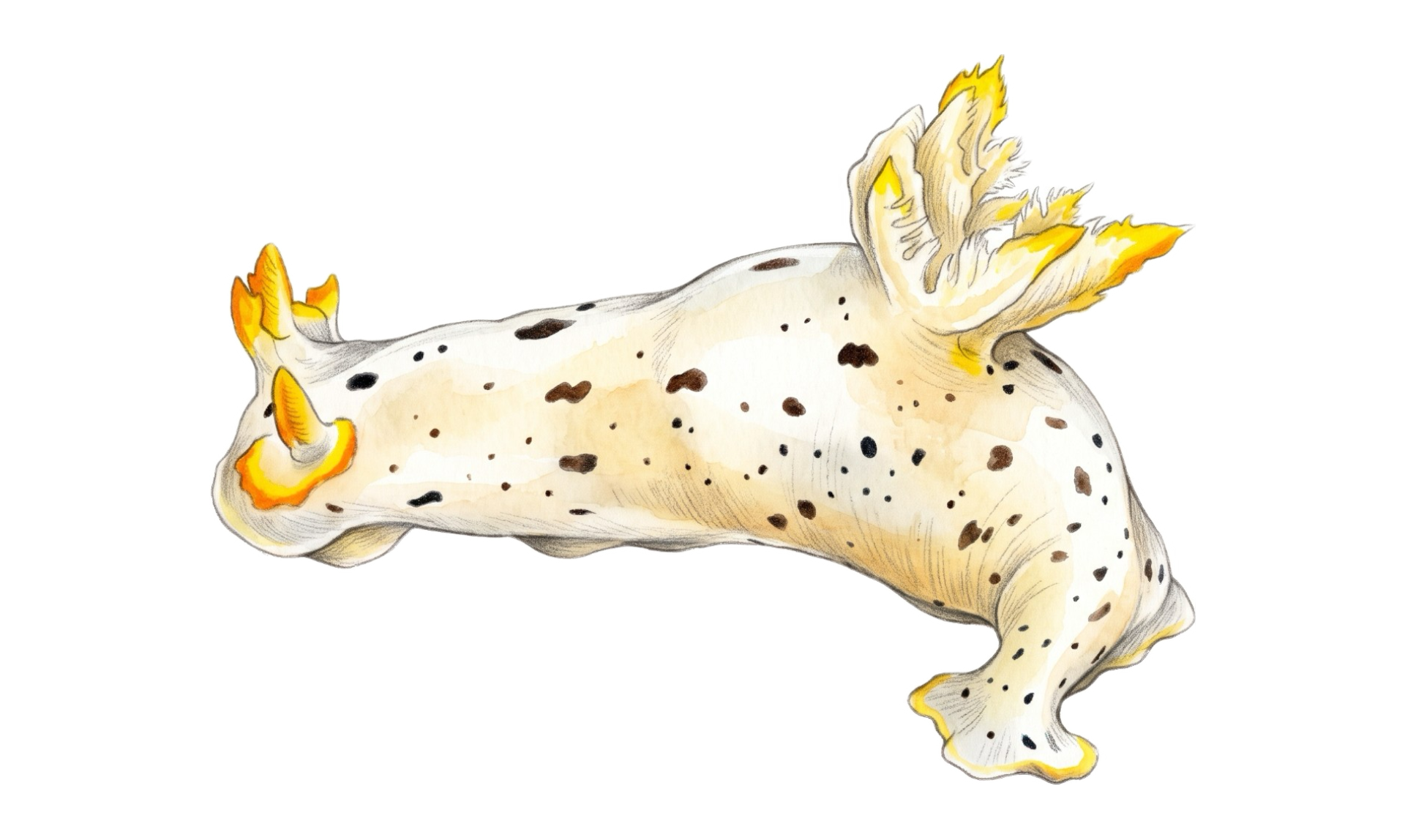
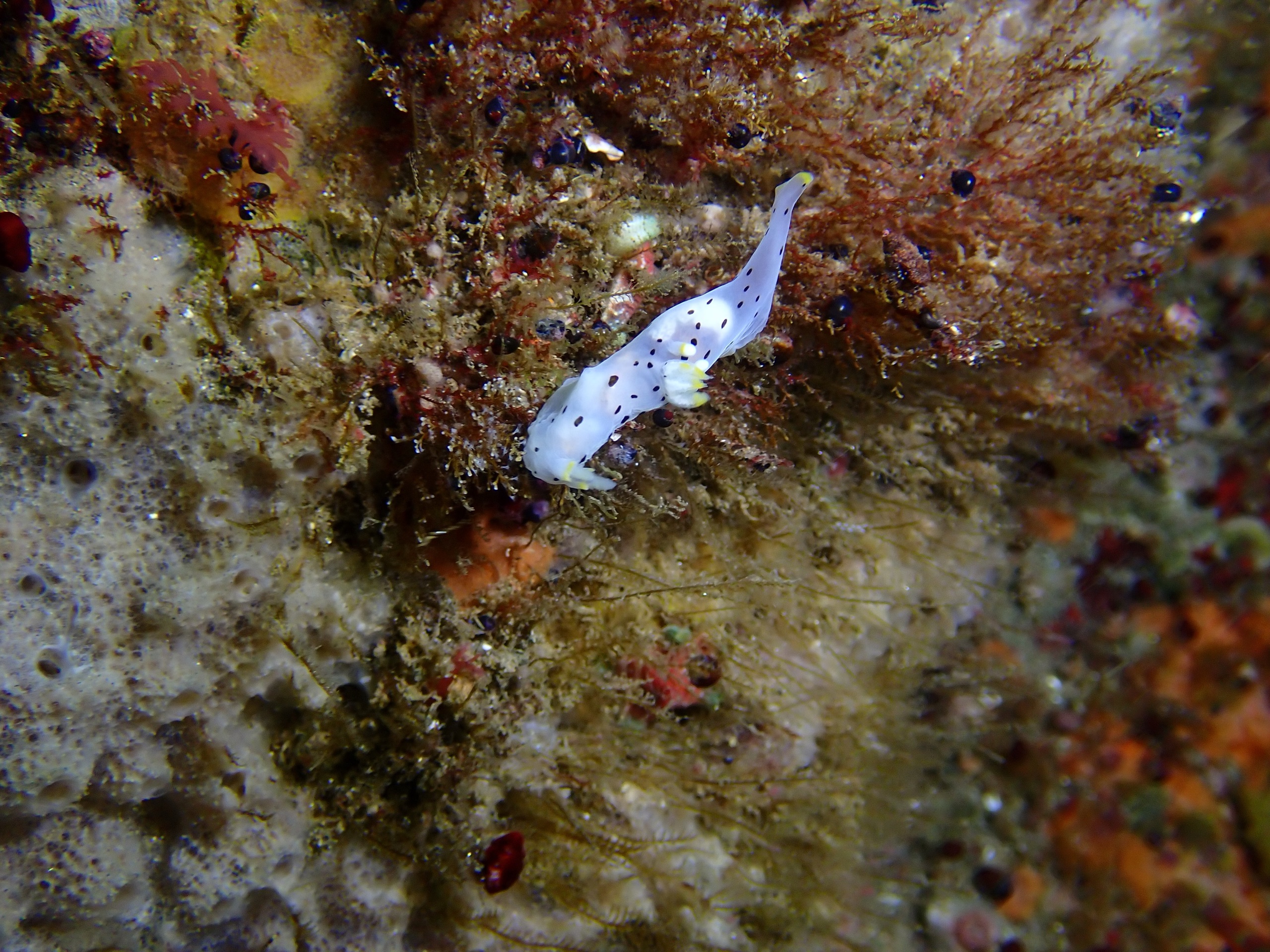
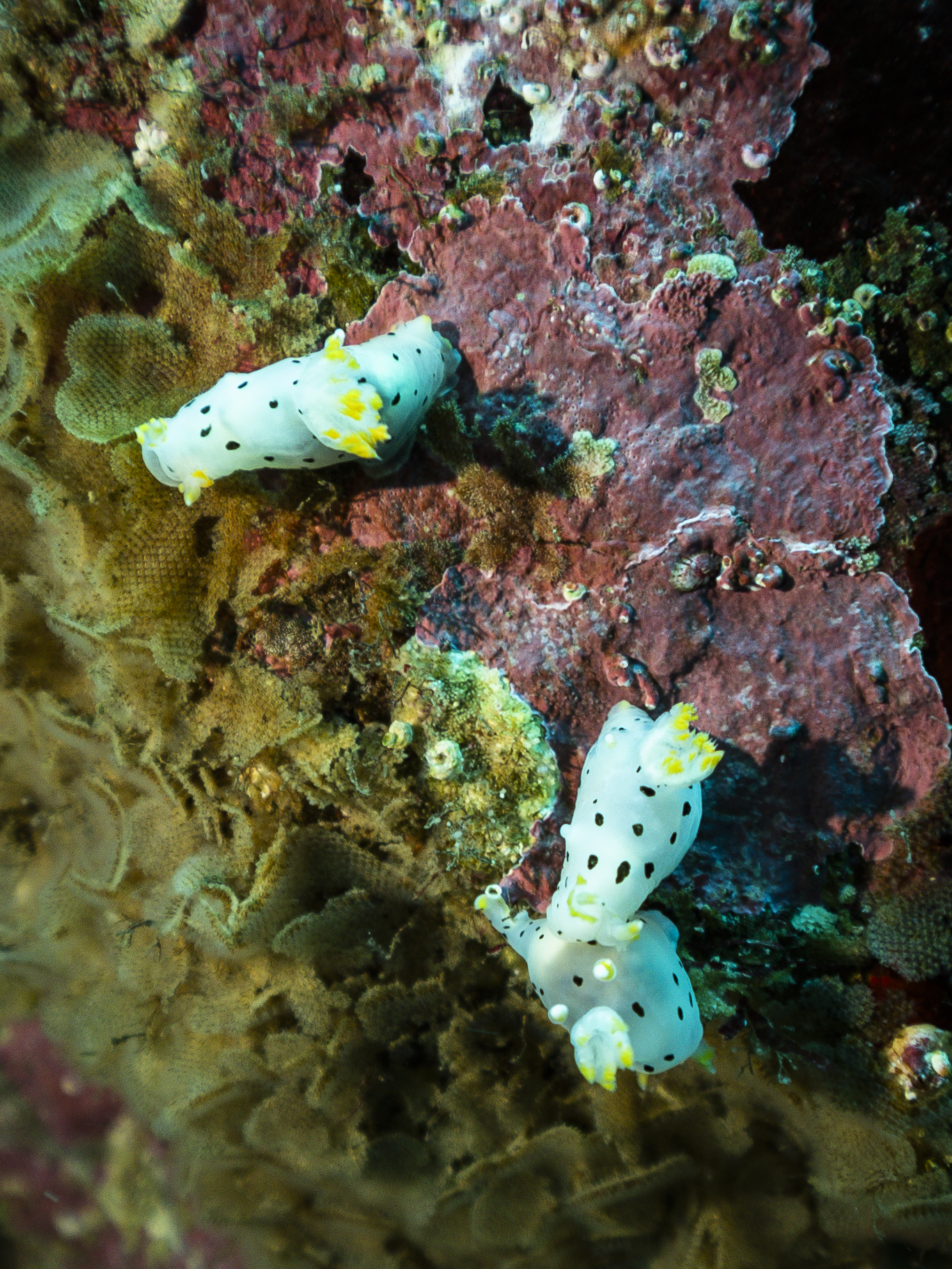
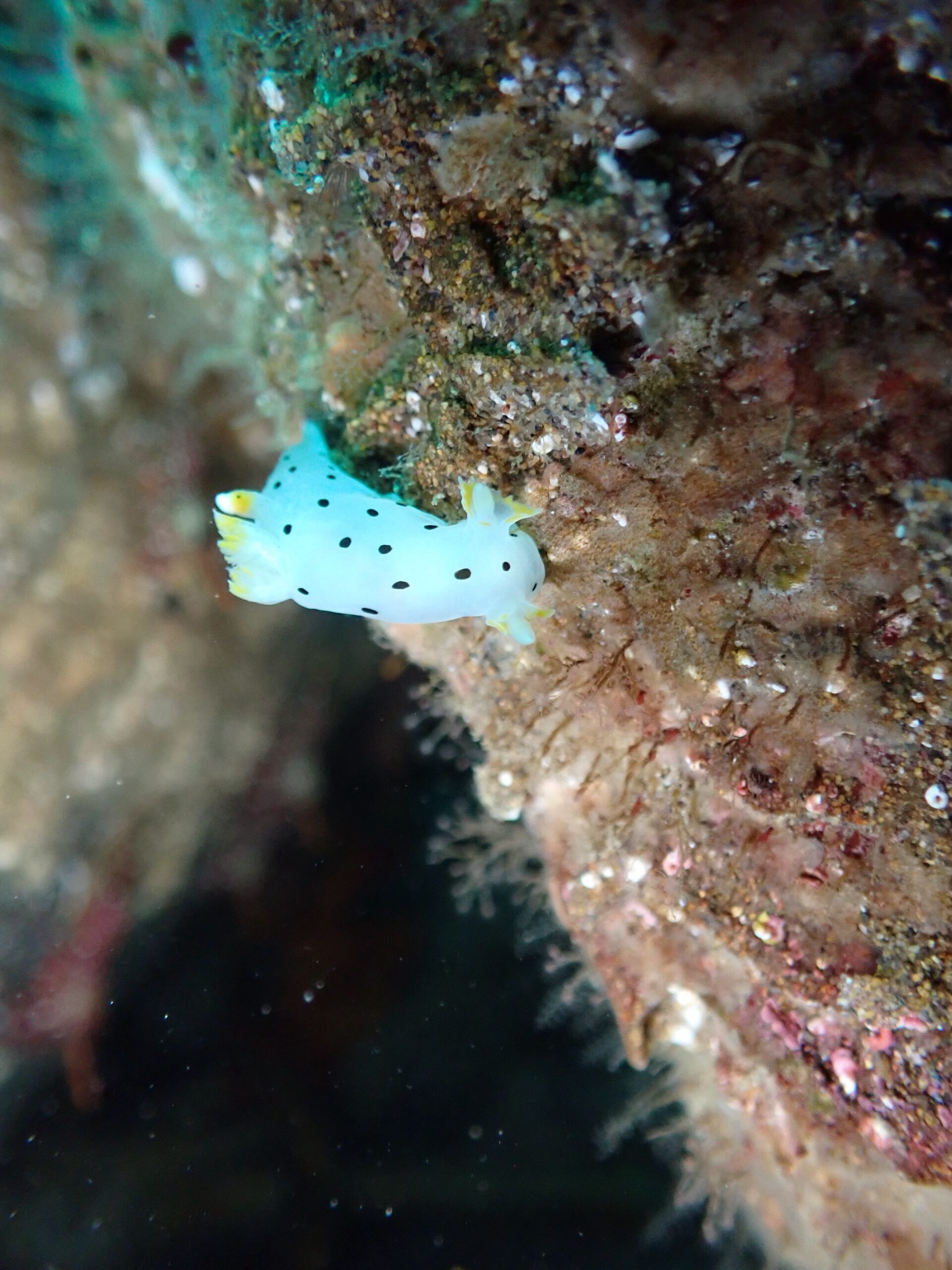
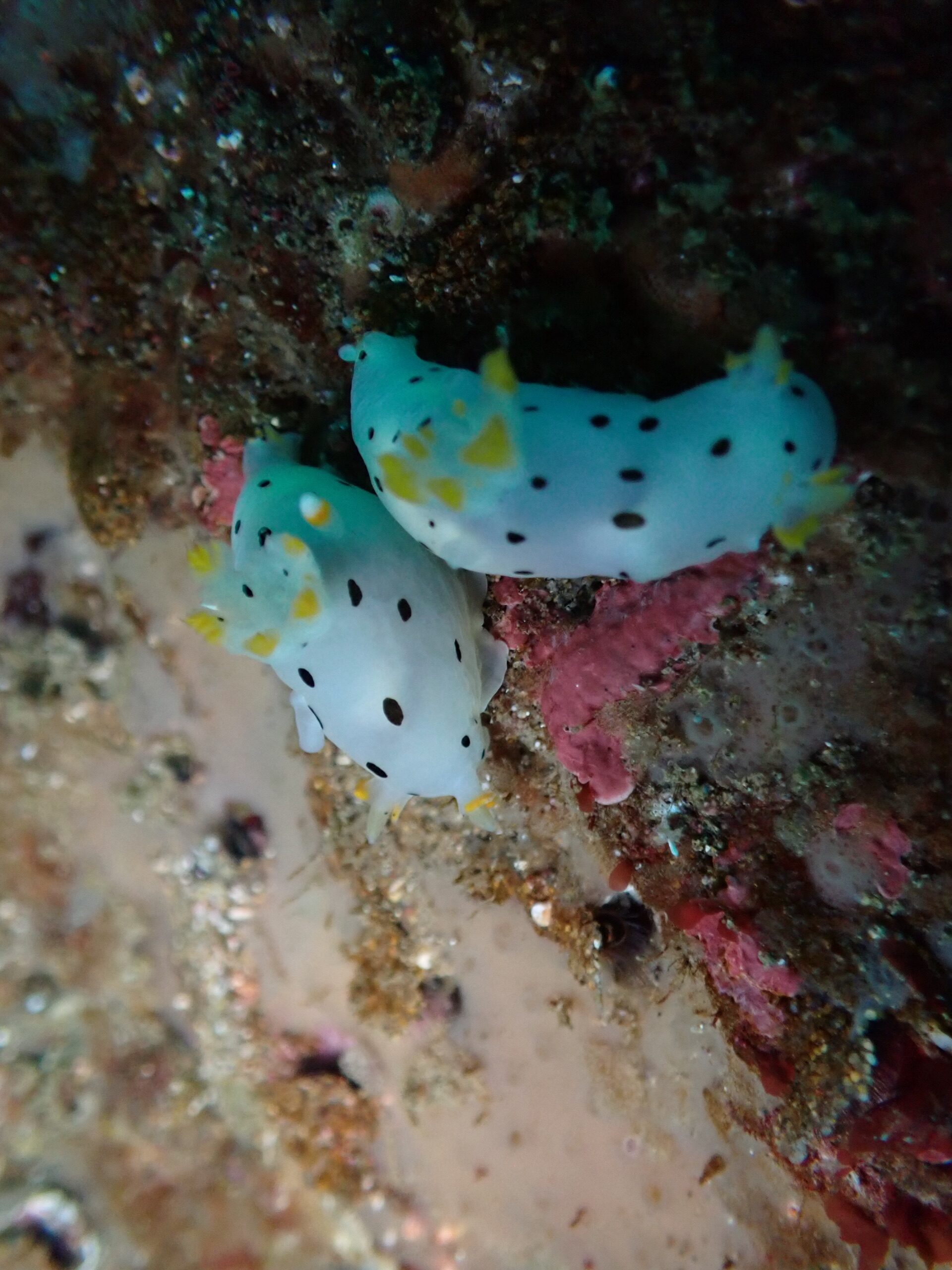
Common name: Dalmatian sea slug, nudibranch.
Scientific name: Thecacera darwini.
Description: A shell-less gastropod mollusk with an elongated, white, somewhat translucent body covered in small black spots. The tip of the tail, the gills and the rhinophores (sensory tentacles) are orange-yellow. The rhinophores are surrounded by lobed sheaths, and behind the gills it has a pair of finger-like projections. Its gills have 5 branches.
Size: It can grow up to 4.5 cm (1.8 in) long.
Where does it live?: In Chile it ranges from Juan López, in the Antofagasta Region, to the Strait of Magellan.
Favorite spots: It is abundant on rock walls in the intertidal and subtidal zones, down to 12 meters (40 ft) deep.
Diet: It feeds on the bryozoan Beania magellanica.
Fun facts: Its name honors Charles Darwin, who collected the first specimens during his voyage aboard the Beagle. The species was formally described in 1950 by French malacologist Alice Pruvot-Fol. It is often parasitized by tiny crustaceans (copepods) of the genus Ismaila. Like other nudibranchs, it is a hermaphrodite: two individuals fertilize each other, and then both lay eggs.
References: - Zagal, C., & Hermosilla, C. (2001). Guía de invertebrados marinos del litoral valdiviano [Guide to Marine Invertebrates of Valdivia].
- Schrödl, M. (2003). Sea slugs of southern South America. ConchBooks.
Conservation status: This species has not been assessed by the International Union for Conservation of Nature (IUCN), and it has not been included in the Species Classification Regulation (RCE) of Chile’s Ministry of the Environment.
Extinct
Extinct in the wild
Critically endangered
In danger
VULNERABLE
NEAR THREATENED
LEAST CONCERN
DATA DEFICIENT
NOT EVALUATED
Extinct
Extinct in the wild
Critically endangered
In danger
VULNERABLE
NEAR THREATENED
LEAST CONCERN
DATA DEFICIENT
NOT EVALUATED