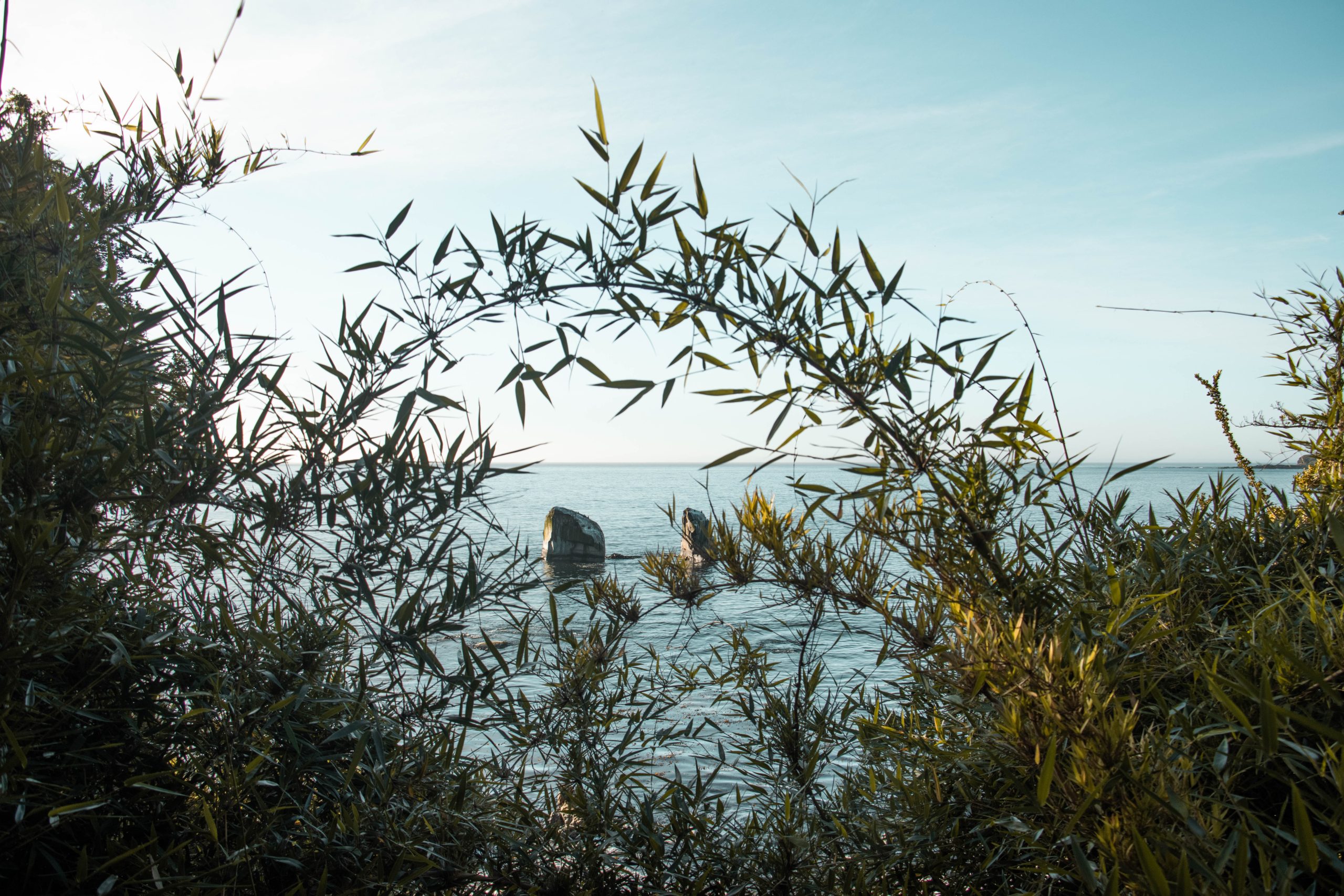
From the pier, the Pacific Ocean stretches out almost undisturbed to the horizon. Only a few clouds dot the sky and, without the slightest breeze, they seem nailed to the sky-blue vault of this July noon.
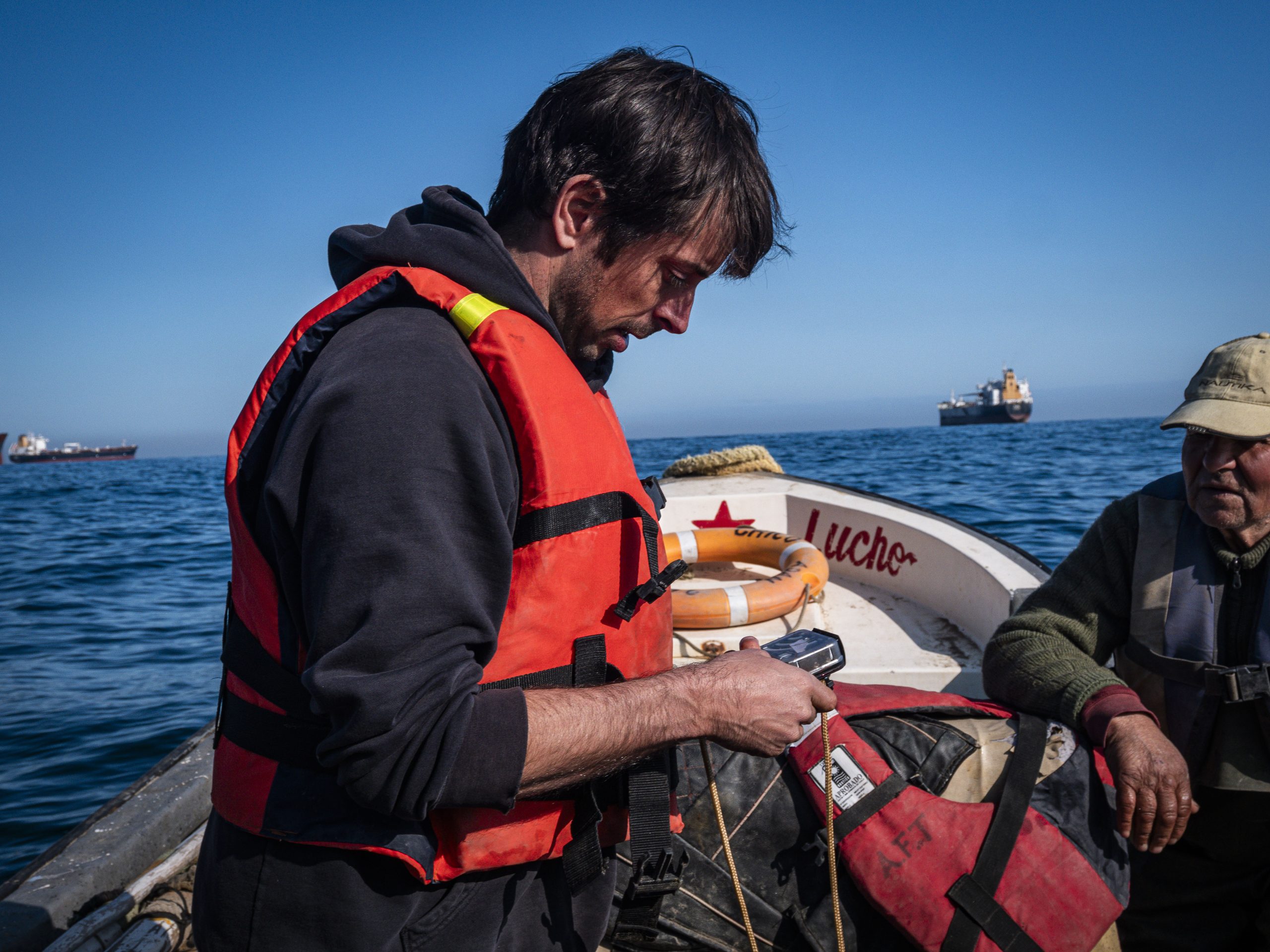
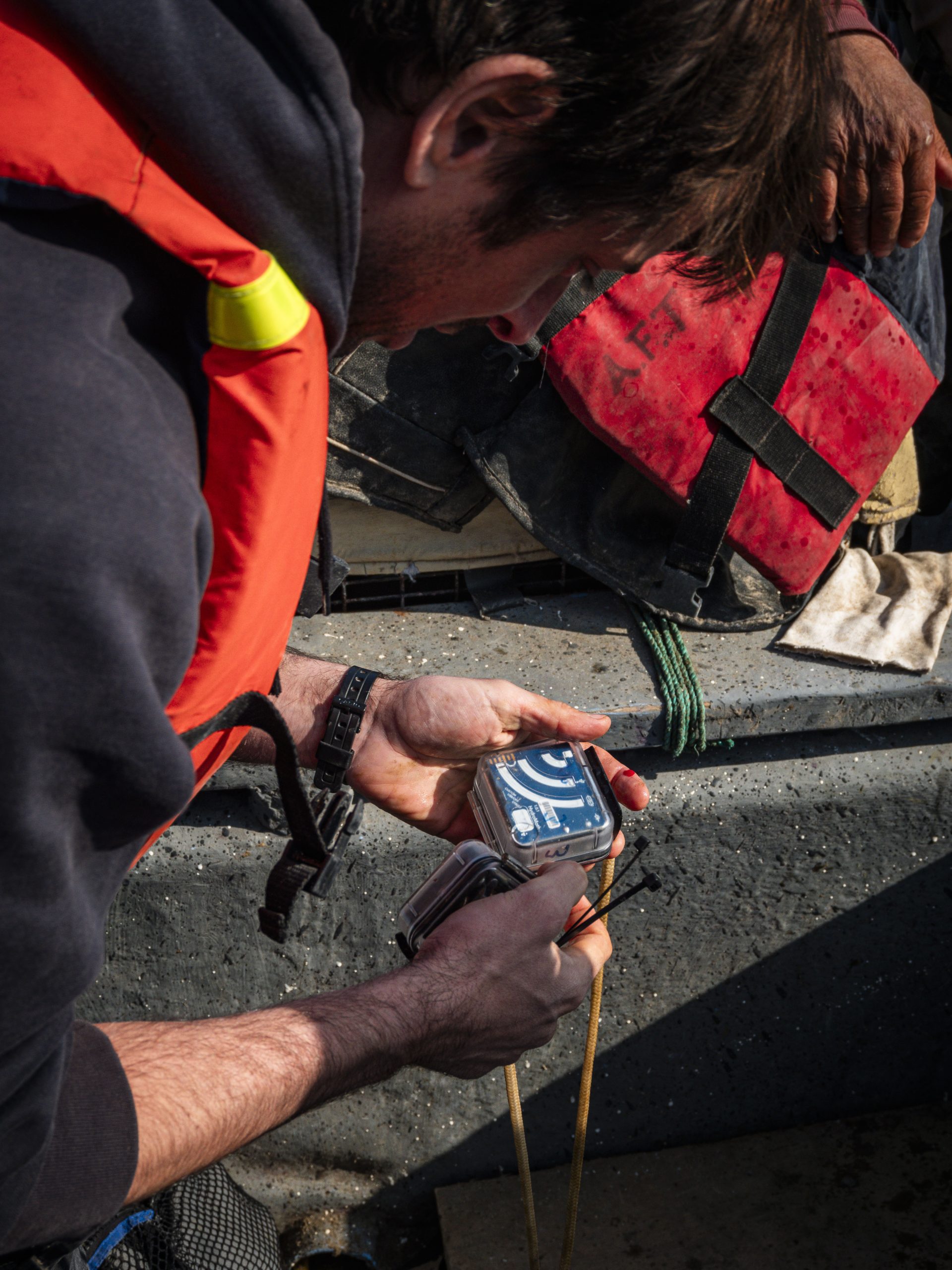
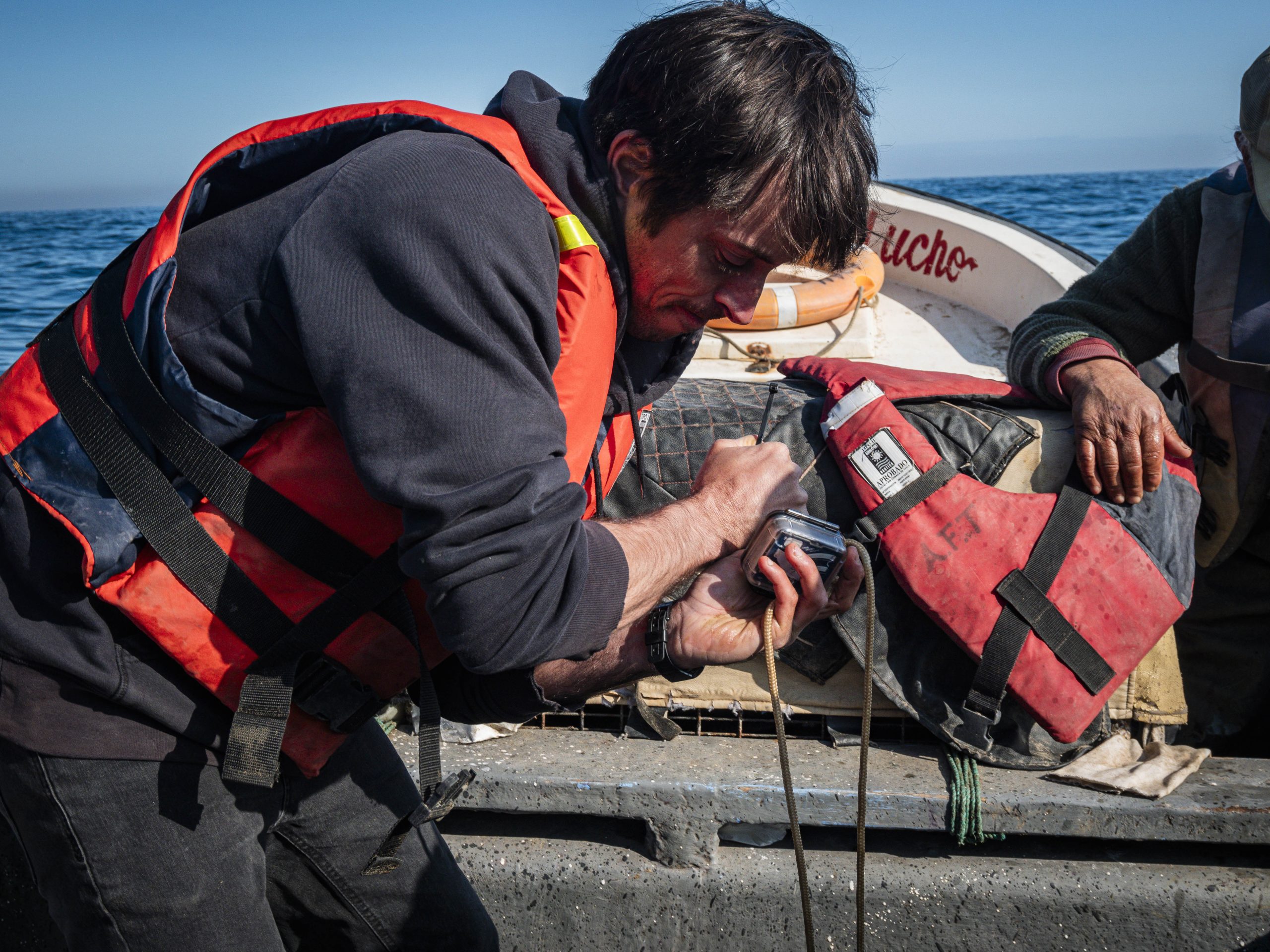
It can’t be seen or touched, but there is a certain anticipation in the air. Rodrigo Oyanedel traveled several kilometers to the northern Valparaíso Region to retrieve some equipment he himself had left there, beneath the waters of a TURF-Reserve: three hydrophones (underwater microphones) holding several weeks of continuous recordings.
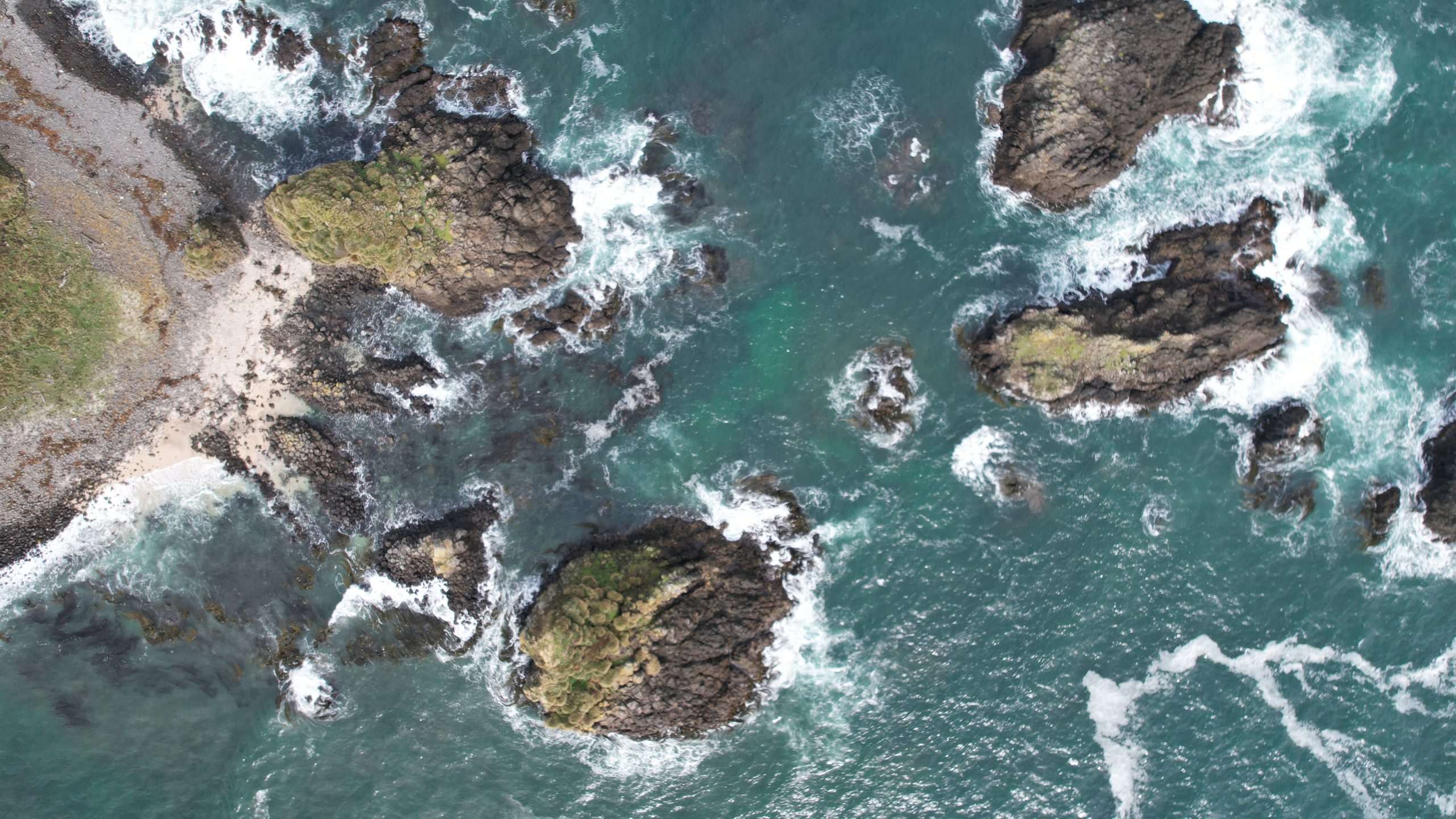
Located within Territorial Use Rights for Fisheries (TURFs), an access regime that grants exclusive harvesting rights to artisanal fishing organizations, TURF-Reserves are no-take marine and coastal areas covering about 15 hectares. They are fishing exclusion zones that make it possible to combine productivity and conservation in a single system.
However, regardless of the legal framework that protects TURFs and the willingness of artisanal fishing organizations to set aside part of their TURFs as TURF-Reserves, this system faces major challenges when it comes to illegal harvesting, especially of a star product: the loco (Chilean abalone, Concholepas concholepas).
Hence the anticipation around this pilot initiative: it could offer a low-cost complement to the care and surveillance of the TURF-Reserves that Capital Azul Foundation has helped establish, now with the support of BHP Foundation, in partnership with five artisanal fishers unions in the Valparaíso Region.
NURTURING AN IDEA
Rodrigo Oyanedel first connected the concepts of conservation and sound about 15 years ago, when he came across a news article on the topic in terrestrial protected areas. In the information age, images tend to capture our attention. Likewise, threats to conservation usually focus on visual and physical impact, overlooking the importance of sound in ecosystems and their conservation.
But how, or rather how much, can the noise of human activities affect species and ecosystems? Could sound help address conservation and sustainability challenges where images don’t seem to show the full picture? “It’s one more sense that we’re not analyzing much, that is extremely relevant, and that isn’t worked on much in the marine field either,” Rodrigo Oyanedel reflects today. Simply reading that article planted an idea deep in his mind. There was no turning back.
However, that idea would only take root many years later. There was a major limitation from the start: the high cost of hydrophones made it unthinkable to leave them running 24/7 at sea, let alone build a network with several points permanently recording underwater sounds. But time and technological progress gradually closed the gap. “It’s a great opportunity because, in my opinion, one of the big problems of conservation in coastal areas is that it’s extremely difficult to monitor what is happening and see whether initiatives are successful. You can establish lots of protected areas, but if people keep coming in to fish, conservation doesn’t become as effective,” says the University of Oxford PhD.
To make his long-held wish come true, Oyanedel contacted Dr. Chris Wilcox, an American colleague who works with hydrophones to detect blast fishing in Southeast Asia, to draw on his experience and test low-cost hydrophones, which did not exist until a few years ago, in some TURF-Reserves.


It’s a great opportunity because, in my opinion, one of the big problems of conservation in coastal areas is that it’s extremely difficult to monitor what is happening and see whether initiatives are successful. You can establish lots of protected areas, but if people keep coming in to fish, conservation doesn’t become as effective
Rodrigo Oyanedel
PhD, University of Oxford
Although the program led by Capital Azul Foundation has a system of surveillance cameras with artificial intelligence to detect potential fishing or illegal harvesting events, it also has its limitations, and that is where sound offers a complementary option. Faced with the challenges of conserving TURF-Reserves, the NGO chose to support the development of this innovative acoustic technology.
“This initiative is an opportunity because it complements the efforts made through the coastal surveillance cameras we already have installed. Hydrophones can help us train the artificial intelligence algorithms we have been working with and strengthen a system that still needs improvement,” explains Rodrigo Sánchez, Executive Director of Capital Azul Foundation.
“It shows you more directly what is happening, and it can potentially detect not only boat engines but also when resources are being harvested. For example, a speargun underwater can be heard perfectly, even several meters away. That way you can start to better understand what is happening underwater and monitor more passively,” adds Oyanedel.
Eventually, the hydrophone could generate a first alert that leads to checking the information through the camera’s visual record, making it possible to identify the boat or confirm the presence of a diver. While one system operates above the surface, the other can show what is happening underwater. Rather than competing, they are two complementary technologies that could be applied not only in TURF-Reserves but also in the roughly 700 TURFs along the coast of Chile.
“TURF-Reserves are a kind of laboratory for testing solutions that can be scaled up and could also work in TURFs. If this technology proves capable of addressing the gaps and problems of TURF-Reserves, it could just as well work in TURFs and help solve challenges that cut across artisanal fishing,” Sánchez emphasizes.
“Protecting TURF-Reserves, as well as the TURFs reserved for artisanal fishing, is no small challenge. Having systems like the one being piloted, which combines innovation and new technologies, is a great help and could make a difference when it comes to scaling up these kinds of models,” adds Alejandra Garcés, BHP Foundation Country Director.
The benefits of hydrophones could go even further. Creativity is the limit. Rodrigo Oyanedel earned his PhD at the University of Oxford’s Interdisciplinary Centre for Conservation Science with research focused on understanding non-compliance with conservation rules and regulations, using the common hake fishery in the Maule Region as a case study.
From that experience, Oyanedel knows that hydrophones could also offer a concrete alternative for estimating fishing effort. “In the Maule and Biobío regions there is a lot of fishing, and we don’t really know how much is being caught, but we could install hydrophones outside a fishing cove and identify how many boats go out fishing each day,” he explains.
In the United States, hydrophones are used to estimate fishing effort in recreational fishing areas several miles offshore, in order to find out which places concentrate the most fishers. However, a system that operates in real time is still lacking: one capable of transmitting and sending “live” alerts (through a text message or a phone notification) whenever something suspicious happens, which is what this pilot initiative supported by Capital Azul Foundation aims for. And coming back to the main topic of the news article Oyanedel read more than a decade ago, hydrophones could also provide key inputs for building a threat map of human activities and their acoustic impact.
MARINE SOUNDSCAPES
Winter 2024. Back home, Rodrigo Oyanedel turns to the desk work. With unwavering patience, he reviews the recordings manually on his computer to label certain sounds. The roar of a boat engine, the metallic clang of an iron bar against rock in search of a loco, the background noise of what seems to be an industrial port… This is how he selects and categorizes sounds to then create an artificial intelligence model with an algorithm capable of identifying them automatically. Put simply, it means training the model, teaching the machine to be smart. And that is precisely the biggest challenge of this initiative.
But Rodrigo is seasoned in these tasks. He has been fascinated by music since he was a child. He learned to play the guitar at age 10, but he also plays bass and drums, and as we talk I notice that his office behind him seems decorated with these instruments, some of them hanging on the wall like trophies. “I’d always wanted to mix some sound with what I do at sea,” says Oyanedel.
Today he spends a good part of the day listening to surreal underwater sounds that send the imagination far, far away. But his work is above all visual: his eyes are fixed like needles on the spectrogram, which makes it possible to see sound as waves combining frequency and intensity. At first, in fact, he found it very difficult to identify the sounds of a boat, and it was his musical background that helped him find the solution.
“It’s fun to use that same knowledge. You can barely hear the boats in the audio, but they show up clearly in the spectrograms,” says Oyanedel. “It’s a lot of work, but I’m very motivated by this project. I’ve heard some really strange things,” he adds, while dreaming of automatically capturing the sound of the iron bar striking when locos are harvested, so that their extraction can be quantified.
By all accounts, that would be a tremendous contribution to measures that strengthen the sustainability of a benthic resource that a few decades ago seemed on the brink of collapse. On a broader level, the development of this acoustic technology could become a key tool for offering solutions that support artisanal fishers in their surveillance work in the TURFs along the coast of Chile.
RELATED NEWS