What do we gain by no longer harvesting resources in our TURF? That is one of the main questions that arise within artisanal fishing organizations when they discuss and reflect with the Capital Azul Foundation team on the possibility of establishing a TURF-Reserve, or Voluntary Protection Zone, within the TURFs (Territorial User Rights for Fisheries, known in Chile as AMERB) that these groups manage, where they hold exclusive use rights over the species associated with the seafloor.
Nearly a decade after Capital Azul Foundation launched the TURF-Reserve program, data collected through subtidal biodiversity monitoring now show that, when there is a strong commitment to care and conservation, positive results begin to appear around the fifth year: where the community decides to protect, the sea begins to flourish, benefiting not only the TURF-Reserve but also the TURF and surrounding areas.
The data speak, and so do the fishers and communities: they have seen with their own eyes this restoration of coastal and marine ecosystems, which began in the Valparaíso Region and is now gradually reaching the sea territories of the Los Ríos and Los Lagos regions, since Voluntary Protection Zones were included in the Benthic Law (Law No. 21,651) enacted in early 2024.

Protecting TURF-Reserves safeguards key ecosystem services for communities, such as shelter for species to reproduce and grow; provision of jobs and food (the spillover effect); protection against and control of coastal erosion; and recreation and nature watching, among many other benefits these ecosystems provide to society that contribute to human well-being.
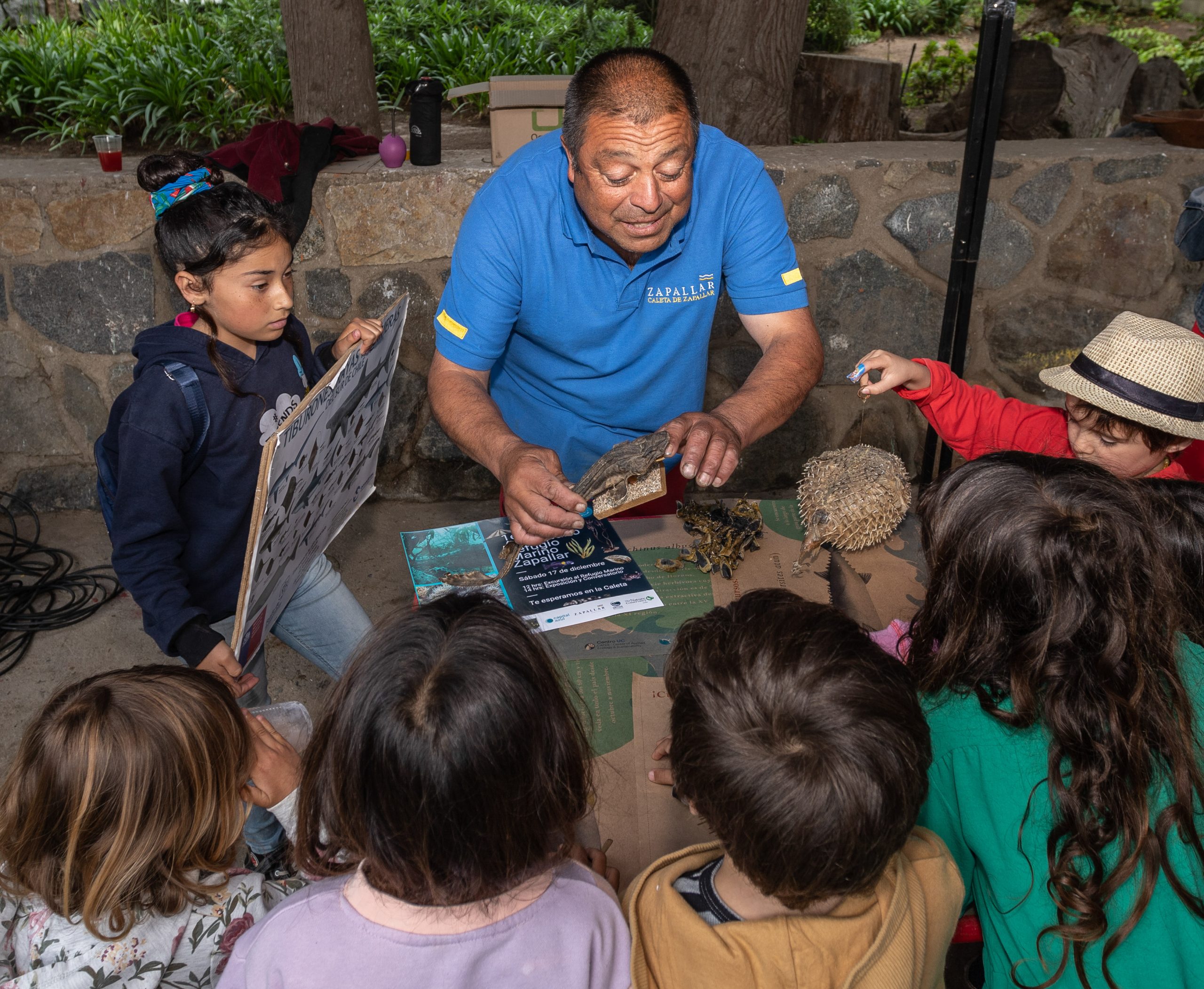
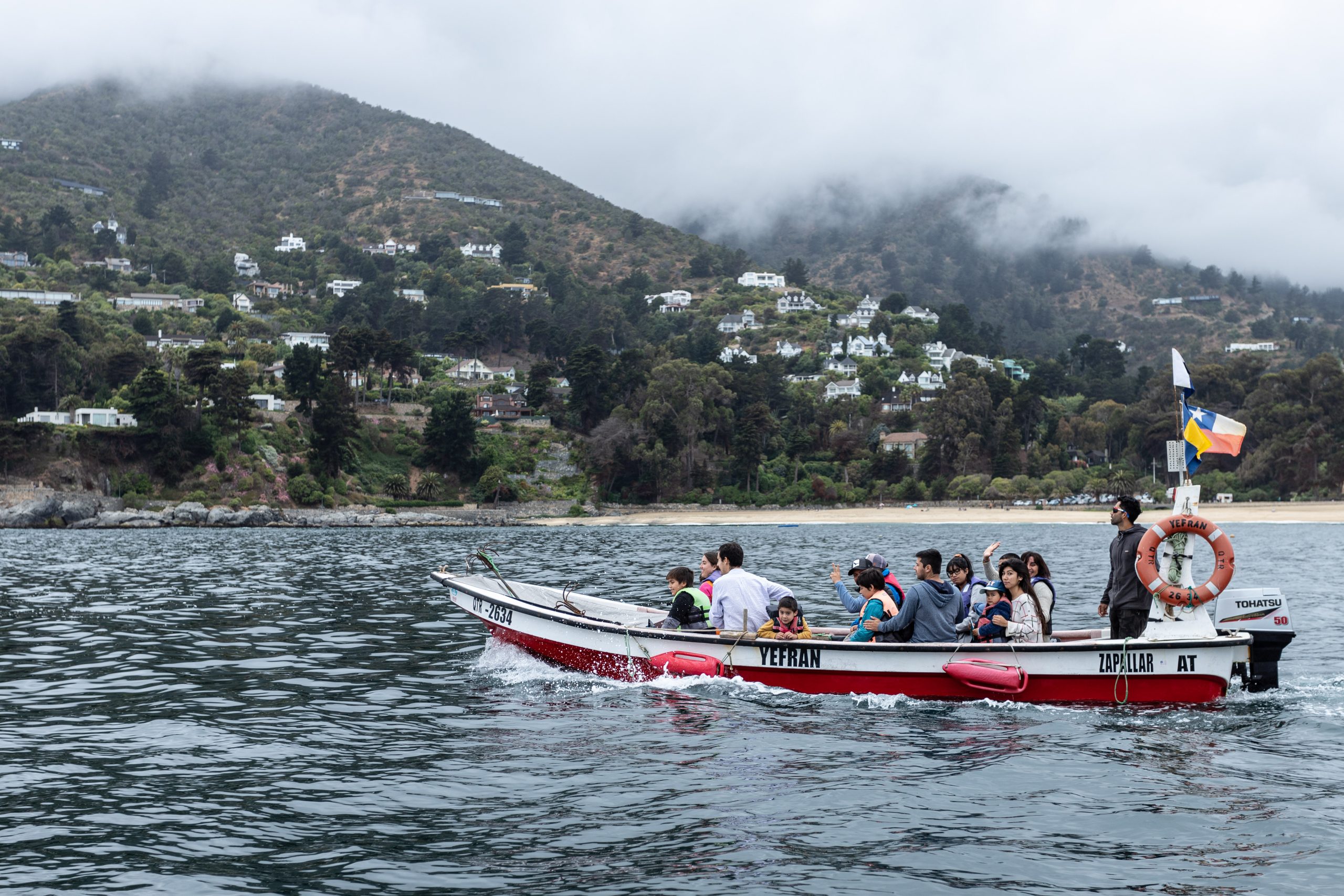
In places like Zapallar and Maitencillo, local artisanal fishers unions say they are now seen in a different light: no longer as predators of the sea, but as guardians of the ocean, opening their fishing coves to the community and strengthening the social fabric.
“The sacrifice of losing a bit of cash was worth it, because we are recovering something for future generations,” Sergio Veas, president of the Zapallar Fishers Union, told us recently.
Even so, there is still a sense that establishing TURF-Reserves carries an opportunity cost. The equation is simple: there is an economic cost for artisanal fishing groups, since they lose income, at least in the short term, by no longer harvesting species such as the loco in their Voluntary Protection Zones.
But today this ‘sacrifice’ is about to become a sustainable business model. The recent approval of a package of regulations linked to the new Biodiversity and Protected Areas Service (SBAP) brings not one but three complementary financial tools that validate the TURF-Reserve model. This ‘trifecta’ of incentives (Biodiversity Offsets; Payment for Ecosystem Services Contracts; and the Biodiversity and Ecosystem Services Certification System) seeks, for the first time, to create an economic ecosystem for community-led conservation.
The first of these refines existing rules for large and medium-sized projects that go through the Environmental Impact Assessment System (SEIA), addressing the challenge of taking responsibility for the biodiversity loss their execution causes and seeking to implement measures designed to effectively offset residual impacts on biodiversity. Put simply, it will no longer be acceptable to destroy a forest and offset it by building a small soccer field.
Among other things, project developers will have to quantify the impacts in the project’s area of influence and the biodiversity gains at the offset site, identifying its initial and final condition. Monitoring carried out during the implementation of mitigation, remediation and offset measures will be key. In addition, developers will have to include in the design of the offset measure any complementary, alternative and/or substitute actions needed to ensure the target is met.
One of SBAP’s functions will be to determine offset sites, opening the real possibility that TURF-Reserves become preferred sites for offsetting impacts on the marine environment, something that did not exist until now. Unlike on land, the ocean was not subject to offsets for impacts on marine biodiversity.

A second economic instrument
Meanwhile, the Regulation on Payment for Ecosystem Services (PES) Contracts provides a clear framework for communities, the State and the private sector to work together to conserve and restore the country’s ecosystems.
How will these contracts work? They are voluntary agreements that set clear commitments for conservation and payment, through which a community or organization that cares for an ecosystem acts as a provider of nature’s services, while an institution, company or public entity that receives the benefit acts as the payer, committing to provide financial support, training, technical assistance or other support in return. In this equation, monitoring is key, as it will make it possible to verify and ensure that biodiversity is being protected.
PES is not a donation; it is payment for a measurable habitat restoration service that creates value along the entire chain, turning the opportunity cost into sustainable income. Among other things, these payments could also go toward strengthening coastal surveillance, community biodiversity monitoring, economic diversification or improving fishing cove infrastructure. We urge companies that depend on a healthy ocean and those with Corporate Social Responsibility (CSR) commitments to be pioneers in signing these contracts. Their investment will guarantee the coastal resilience that sustains their own operations and the families of their employees.
From the perspective of the TURF-Reserve Program, this regulation is an innovative tool that opens the possibility of formalizing community-led commitments to the conservation and sustainable use of coastal and marine ecosystems. Through them, artisanal fishing groups will be able to take responsibility for preserving, restoring or sustainably using marine habitats, as they have already been doing to maintain or recover the ecosystem services these spaces provide, but now with the possibility of receiving something in return, monetary or not, that recognizes the value of their work for the common good.
The regulation governing these contracts should take effect in early 2026. It will include ecological sustainability criteria so that contractual obligations protect the integrity of ecosystems, define the minimum content of agreements and establish a public registry of contracts, managed by SBAP, ensuring transparency, traceability and protection of the public interest in managing these spaces.

Another tool to create incentives
Finally, the Biodiversity and Ecosystem Services Certification System seeks to encourage, through the certification of activities, practices and sites, the conservation of biodiversity and the maintenance or recovery of ecosystem services. It will set standards for the actions and results that can be certified, mobilizing funding for conservation and giving visibility to the benefits of good practices and of ecosystem conservation or restoration.
In concrete terms, it will be a recognition, through labels, of communities and organizations that are leading effective conservation initiatives. Applied to the TURF-Reserve Program, it could be granted to products harvested from TURFs that have a Voluntary Protection Zone. For example, the loco could receive from SBAP a distinctive label and story (similar to Sernapesca’s Blue Seal) because it comes from a TURF managed sustainably and according to good practices.
In practice, this ‘trifecta’ of incentives means that a pioneering fishers union like Maitencillo’s could, in the short term: 1. Receive direct payment (PES) from, for example, a local tourism company for the service of keeping the water free of pollutants; 2. Receive offset funds from an industrial project for impacts generated elsewhere, turning its TURF-Reserve into a receiving ‘biodiversity bank’; and 3. Sell its locos (from the TURF) at a premium price thanks to the Certification Seal that backs its sustainable management.
These regulations represent great opportunities to begin formally recognizing the effort and commitment to conserving and restoring coastal and marine ecosystems of artisanal fishers in places such as La Polcura, Zapallar, Cachagua, Maitencillo, Ventanas and Huiro, pioneers in establishing TURF-Reserves. They may eventually find institutional support to sustain and expand their work over the longer term, channeling resources and offsets to successful conservation initiatives such as these Voluntary Protection Zones, which have data backed by the regular biodiversity monitoring we have carried out for years in collaboration with the unions in the TURF-Reserve Program.
Through the GEF Incentives for Biodiversity Conservation project, in which Capital Azul Foundation acts as conservation guarantor for the Maitencillo and Ventanas demonstration experiences, our challenge is to ensure these regulations do not remain legal theory that never reaches grassroots organizations. At least at first, it will be key to support these processes financially and legally, whether so that PES contracts and offsets come to fruition, or so that the methodology used to implement a TURF-Reserve is recognized by SBAP and can enter the certification system. Over the next two years, the Maitencillo and Ventanas artisanal fishers unions could take decisive steps toward consolidating a new global standard for community-led conservation.
The challenge we pose at Capital Azul Foundation is twofold. On the one hand, we will need to navigate nimbly so that the ‘fine print’ of these regulations does not hold back community momentum. On the other, there is an opportunity to put the right incentives in place to change our relationship with the ecosystems we inhabit and depend on, making their conservation viable in the long term.