Surveillance is one of the main challenges in caring for marine protected areas worldwide, and TURF-Reserves, as well as the TURFs (Territorial User Rights for Fisheries, known in Chile as AMERB) where these Voluntary Protection Zones are located, are no exception. Surveillance and enforcement are what make it possible to restore biodiversity and deliver the resulting economic and ecological benefits to local communities.
Actively protecting a TURF-Reserve against illegal harvesting of marine resources ensures that biodiversity can flourish again, allowing the recovery not only of iconic commercial species such as sea urchins and locos, but of a whole web of life and ecosystem interactions. Besides making the ecosystem more resilient to the climate emergency, this protection sustains the spillover effect documented in the scientific literature, in which surplus marine life from the protected area expands and/or migrates into fishing areas, securing livelihoods and strengthening the long-term food and nutrition security of coastal communities.
“Without effective surveillance, the biological benefits of TURF-Reserves are considerably reduced. Only when the community is empowered to care for these ‘savings accounts’ that Voluntary Protection Zones represent can conservation become tangible well-being and a real resilience tool for fishing coves and local communities through the sustainable use of TURFs,” said Rodrigo Sánchez Grez, Executive Director of Capital Azul Foundation.
As part of the GEF Incentives for Biodiversity Conservation Project, marine biologist Valentina Rebolledo led a study whose overall objective was to assess the effectiveness of coastal surveillance systems. The work involved three main activities: 1) identifying relevant experiences with surveillance systems in other TURFs and internationally; 2) defining criteria to evaluate the surveillance system; and 3) designing data collection instruments.
The methodology was based on a review of national and international scientific literature and technical documents, which made it possible to identify components that directly or indirectly influence illegal harvesting of marine resources, reporting and the effectiveness of surveillance in marine protected areas and TURFs.
In addition, Capital Azul Foundation’s surveillance logs and plans were reviewed to understand the surveillance system currently in place and take a closer look at recorded cases of illegal harvesting, in order to identify gaps and challenges that need to be addressed to strengthen surveillance of the TURF-Reserves.

Key findings
The results indicate that illegal harvesting of marine resources is a multifactorial phenomenon, influenced by environmental, economic, social, governance and operational variables, with 14 main factors identified. These include the proximity of open-access areas, resource abundance, accessibility, the possibility of engaging in alternative economic activities, perceived levels of violations, perceived likelihood of being detected, the legitimacy of the protected area and the reasons that do or do not motivate people to report.
The report also examines different surveillance approaches, such as technological systems, patrols and community participation. It notes, for example, that although there has been progress in satellite monitoring through platforms such as Global Fishing Watch’s Open Ocean Project, this technology is still limited for artisanal fishing. Camera surveillance, meanwhile, has improved the capacity to detect illegal activity and reinforced the perception of surveillance and the likelihood of detection. Even so, it still faces challenges such as delays in receiving or viewing images, resolution and accuracy of identification, among others.
The study stresses the importance of active surveillance by the relevant authorities, identifying efficient follow-up as a challenge. This is not only to penalize offenders but also to encourage people to report suspicious activity. On that point, the report finds that the rate of reporting to authorities after witnessing illegal harvesting is low, largely because of the complexity of the process and the difficulty of obtaining solid evidence. The challenge of encouraging reporting would mainly involve simplifying reporting mechanisms and changing certain regulatory aspects, including formally integrating community surveillance into detection work and the official reporting process, and greater control and clarity over the rules on subsistence fishing.


There are a number of factors involved, but one of the key ones is the social component. To foster a culture of compliance, clear information and education about levels of non-compliance are essential, to address misperceptions about levels of theft, risk and impact, and to communicate the benefits the reserve can bring us both personally and as a community, so as to discourage theft.
Valentina Rebolledo, author of the study.
In line with the spirit of the TURF-Reserve model promoted by Capital Azul Foundation, the study emphasized the importance of community surveillance, which offers great low-cost opportunities. This is especially relevant given that, according to the literature, surveillance accounts for about 75% of the operating costs of artisanal fishing groups, which is why the TURF-Reserve model promoted by Capital Azul Foundation places so much emphasis on community surveillance.
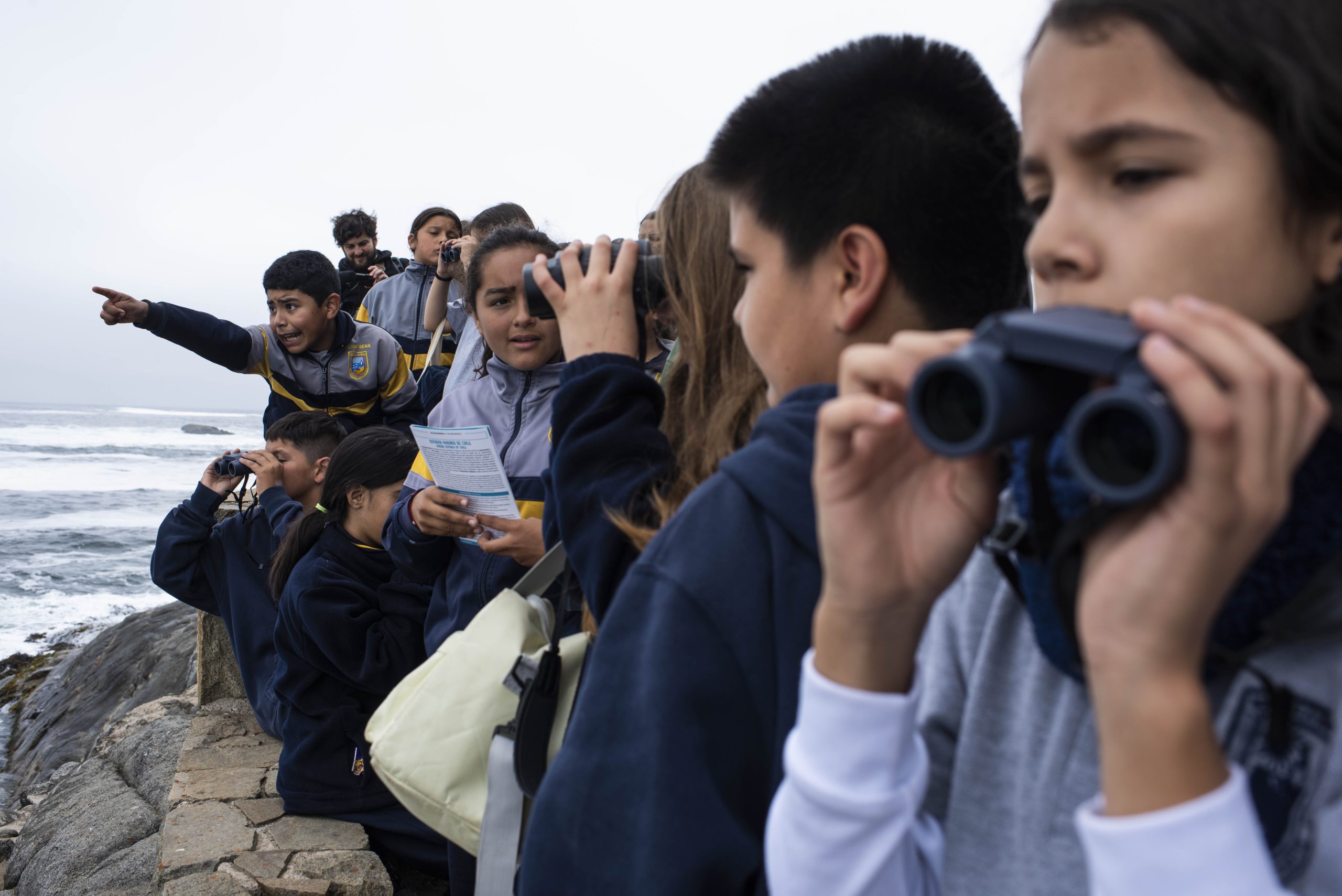
“Surveillance should not depend exclusively on technological solutions, but should integrate social factors that strengthen a culture of compliance. It is imperative to manage community perceptions to legitimize the reserve and establish effective reporting channels that provide feedback on sanctions, thus breaking the cycle of inaction,” the document states, highlighting opportunities to collaborate with recreational fishers, dive centers, restaurants, children and other members of coastal communities so that they value the ecosystem services of TURF-Reserves and the importance of protecting them.

Meanwhile, subsistence fishing is also relevant to surveillance, as it is sometimes used to socially justify illegal harvesting, even though under current regulations it cannot be carried out by recreational or artisanal fishers, nor in TURFs.
“The information gathered makes it possible to identify structural challenges that affect the effectiveness of the surveillance system and that need to be addressed through governance, community communication and regulatory clarity,” the report adds.
Based on this work, a framework of criteria for evaluating surveillance systems is proposed, organized into four areas: social context; reporting and follow-up; governance and compliance; and theft and detection. These elements are the basis for designing data collection instruments to characterize the perceptions, barriers, capacities and conditions that influence surveillance.
Along these lines, Amerindia Jaramillo, National Coordinator of the GEF Incentives for Biodiversity Conservation Project, stressed that “strengthening coordination among the agencies responsible for surveillance, enforcement and sanctions is a key opportunity to improve TURF management. Artisanal fishing organizations have historically shown strong commitment, devoting human and financial resources to protecting the marine resources in these areas. Within the framework of co-management between the State and communities, moving toward more coordinated action will boost these efforts, strengthen resource protection and contribute to safer working environments for fishers.”
Capital Azul Foundation is already working on coastal surveillance on several fronts, precisely to address existing gaps that go beyond technology and the solutions new surveillance cameras can offer. These include improving coordination with actors outside artisanal fishing groups, including public institutions such as municipalities, the National Fisheries and Aquaculture Service (SERNAPESCA), Port Authorities and Carabineros (Chile’s national police), as well as various community engagement initiatives to foster a sense of belonging and care for the TURF-Reserves.
In this context, progress has been made on interagency coordination in Ventanas, involving and connecting actors such as the Fishers Union, the Municipality of Puchuncaví, SERNAPESCA, Carabineros and the Quintero Port Authority. The aim is to strengthen both preventive action and enforcement.

At the same time, work is under way to design a chatbot to make it easier to report suspicious activity or outright illegal harvesting, improving and speeding up reporting channels while establishing a direct link with the relevant authorities. This virtual assistant aims to support the authorities’ work by making reporting easier and delivering better-quality evidence, adding one more tool for the care and surveillance of the TURF-Reserves.
RELATED NEWS