| The photographs in this publication were taken in Curamín (Hualaihué), Calbuco, Las Cruces, Los Vilos and Caleta Queule by Susana Cárcamo |
Artisanal diving, an ancestral activity that is key for coastal communities, that combines learning and cultural heritage and has been passed down through many generations, is the subject of research presented in the recent book “Vaciante y Creciente: Inmersiones al buceo artesanal” (in Spanish), by anthropologist Susana Cárcamo, marine biologist Stefan Gelcich (UC) and sociologist Rodrigo Estévez (UST).
The book grew out of a desire to understand and document the perceptions and motivations of shellfish divers, women and men, as well as spearfishing divers from northern Chile to Patagonia, for taking up this trade. Estévez and Gelcich, both researchers at the Millennium Institute in Coastal Socio-Ecology (SECOS) and the CAPES Center, worked with Cárcamo on the book, initially drawing on twenty-five divers and eventually more than thirty.
“This writing is aimed at a general audience; it is not a scientific article meant for a purely academic and expert readership. The book is an object of knowledge and recognition, a living testimony: the sea is alive and so is the human relationship with it. It is a contribution so that its protagonists, hopefully, see themselves represented in these pages, and so that people in big cities like Santiago make it part of their cultural heritage, not just as something pretty or exotic,” says Susana Cárcamo.

A WAY OF LIFE UNDER THE SEA
The book, the first of its kind and depth about this activity in Chile, invites readers to recognize diving as an activity that shapes community relationships, forms of collective organization and a sense of belonging. The accounts of divers reveal support networks, shared learning and a work ethic rooted in respect for the sea and those who inhabit it.
Along these lines, for Modesto Santis, an artisanal diver for more than 50 years in Las Cruces, Valparaíso Region, “being a diver means everything. I studied thanks to diving, I built a home and a family, and I raised my daughters thanks to diving. I can’t ask more of life; I’m very grateful I chose this profession. Taking part in the book was very important; in it we can express how we feel as people, as workers, as fathers, and I would like others to understand the sacrifice of this very important trade.”
In another account in the book, Simón Díaz, a shellfish diver from Isla Quigua in Calbuco, Los Lagos Region, who has worked with hookah (surface-supplied diving) for more than 30 years, also highlights what it has meant in his life: “To me, diving is something hard to put into words, because I think it is one of the toughest jobs there is, with people who brave all kinds of weather, storms, sailing and distances to come home with a living for their families.”
The same is true for Antonia Mayorga, a diver and breadwinner in Rolecha, in the Hualaihué district. “I loved it; it was incredible, something that makes me very proud, because it has lasted over time and become a source of work within my family: my husband and my two sons make their living from it.”

ARTISANAL FISHING AND RESOURCE CO-MANAGEMENT
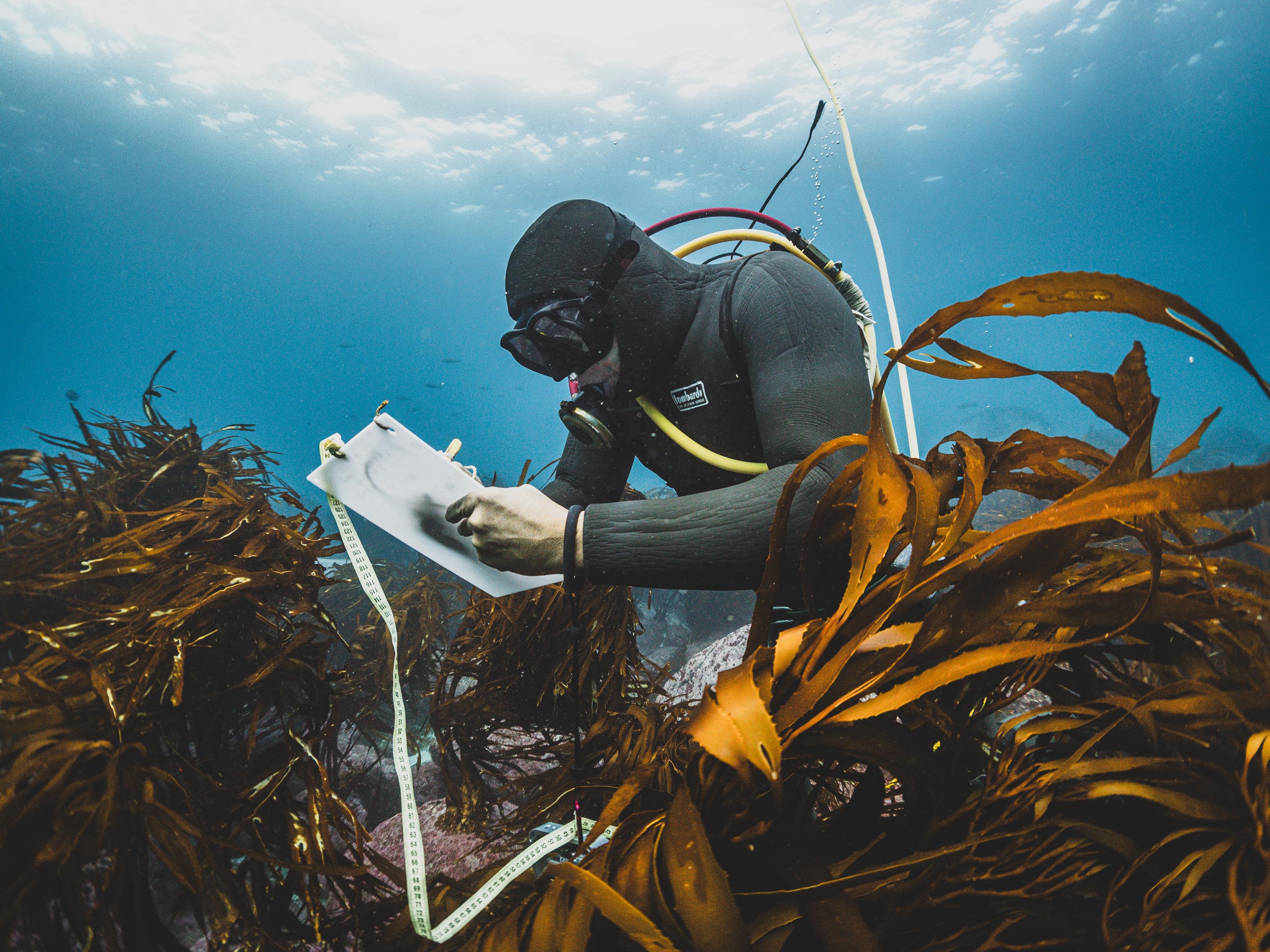
Through many accounts, the book presents artisanal diving as a structural part of benthic resource management in Chile and of seafood consumption. Through stories and historical data, it documents how divers have been key players in implementing TURFs (Territorial User Rights for Fisheries, known in Chile as AMERB), taking part directly in the assessment, controlled harvesting and monitoring of natural beds of commercially important species.
However, the research also points to a historical debt: a lack of recognition from society and the State. In artisanal fishing, diving has been key for harvesting benthic resources such as locos, sea urchins, limpets, seaweed and rockfish, sustaining local economies and contributing to food security and to the identity of many coastal territories.
“In society, the image of the artisanal fisher is more established. It’s what people know best; there are even poems and songs dedicated to fishers, but not to divers,” Cárcamo notes. “Historically in Chile, traditions linked to farming, livestock and forestry have prevailed for a variety of reasons, and the bond is also closer with a diet based almost entirely on products from the land,” adds the anthropologist, who also collaborates with CAPES.
The book also shows that diving has generated direct and indirect employment in many fishing coves, linked to production chains that include the processing, transport and sale of marine resources. However, it also highlights the precariousness that has historically characterized this activity: informality, occupational hazards, exposure to diving accidents and little institutional recognition for long periods.
For the authors, as well as for those who share their stories in the book, a worrying aspect is how little the trade is being passed on to new generations.
“There is a significant gap on this subject in academia, especially considering the diversity of experiences and ways of living on the coast among people from the north and south of the country. In my view, unless there is collaborative and direct work at the national level between scientists, academics and State agencies with people connected to the sea, job insecurity will keep getting worse, and so will people leaving the trade. Today there are other economic attractions for young people that compete with shellfish diving, so planning how harvesting will continue, which species, how and when, is urgent,” Cárcamo adds.

Finally, Stefan Gelcich, co-author, academic at UC, director of the SECOS Millennium Institute and co-founder of Capital Azul Foundation, adds: “We hope this book will promote society’s understanding of and sensitivity to the vital importance of artisanal diving in Chile, and inspire authorities, researchers, civil society organizations and divers themselves to work together to build a more prosperous and equitable future for this sector. The challenges are many, but the opportunities are even greater.”
The book is available as a free download (in Spanish) on the websites of the CAPES Center and the SECOS Millennium Institute.


RELATED NEWS