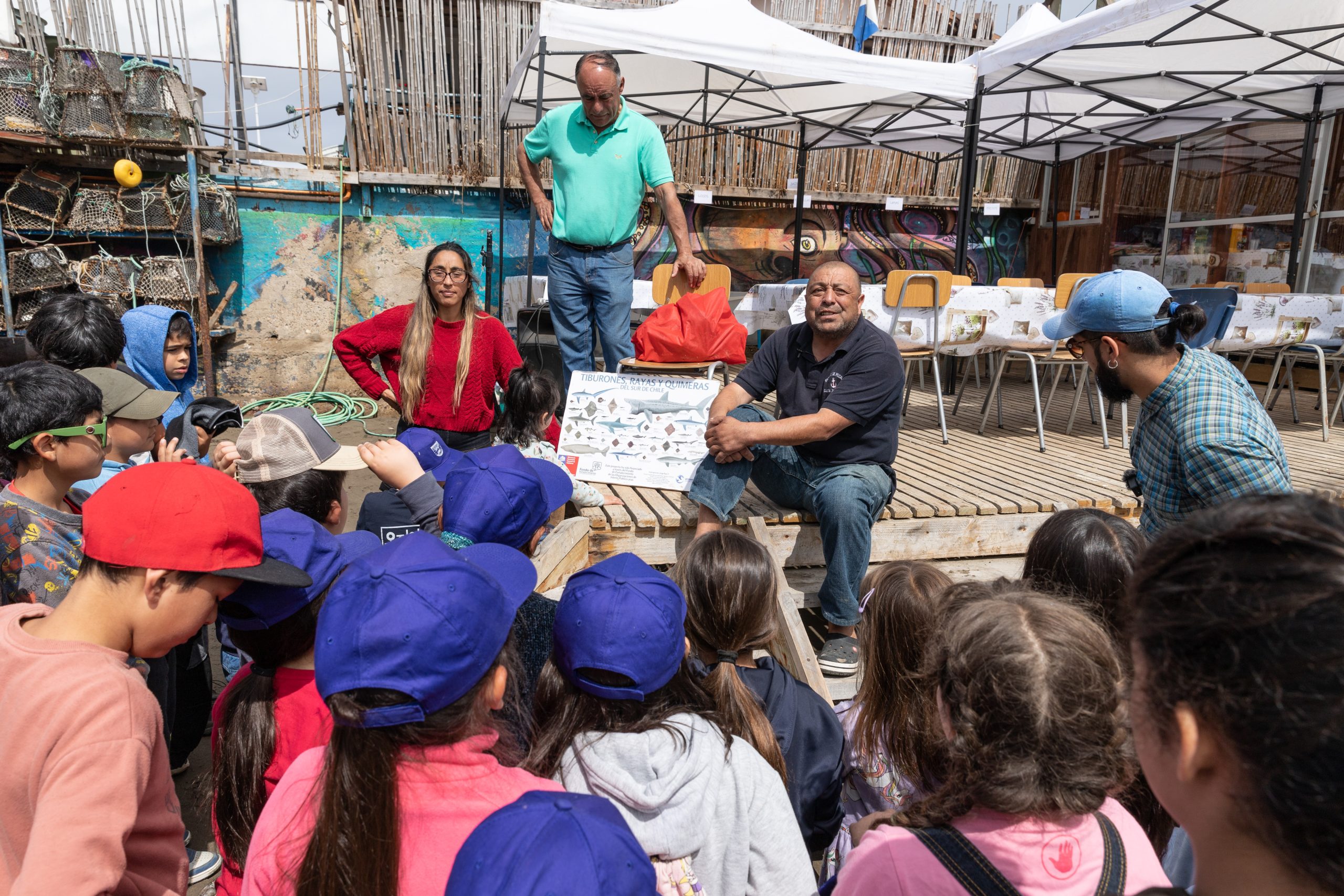
It’s cold, but with their hearts open to weaving community, an enthusiastic group of just over 30 women warms up to the sound of conversations born from genuine exchange and attentive listening.
They have come here, to the headquarters of the Cachagua Artisanal Fishers Union, from many different stretches of coast and sea: from places like Chañaral de Aceituno and Pichilemu, Huiro and Valdivia, Puerto Montt and Castro, Concón and Talcahuano, La Polcura and Maitencillo, and even from Mexico. A tide of care for the ocean brings them together with a shared goal: to make visible the role of women in TURF-Reserves, build ties between communities, share knowledge and perspectives, and co-create collective goals.
The “Women’s Gathering for TURF-Reserves: Perspectives, Dialogues and Care” was organized by Capital Azul Foundation, with support from BHP Foundation and the Millennium Institute in Coastal Socio-Ecology (SECOS). It grew out of a recent study by Capital Azul and Fundación Mujeres de Mar in La Polcura, Zapallar, Cachagua, Maitencillo and Ventanas, which sought a deeper understanding of the women of the sea in these TURF-Reserves. Some of them also took part in co-designing the gathering, contributing their perspectives from the very beginning.
In an atmosphere of care, trust and inspiration, the cold gradually faded through participatory activities that invited them to get to know each other, reflect together and create a shared space for exchanging experiences, dreams and challenges.
The gathering was enriched not only by diverse places along the coast, but also by different realities and roles: shellfish and seaweed gatherers and fish filleters, union leaders and divers, environmental educators and artists, cashiers and cooks. These roles have historically sustained the productive work of artisanal fishing, yet they have often remained invisible in a sector that is still seen as male in the collective imagination.

“Within the TURF-Reserve Network there is a great diversity of women with different ways of getting involved in caring for TURF-Reserves and different interests in doing so. With this gathering we are starting a path of collaboration with them, in which we seek to accompany and support them in their role, so they can do it the way they dream and imagine,” explains Paulina Martínez Marín, Director of Communities & Education at Capital Azul Foundation.
“We’ve been able to see how they have connected with women from other places. They’ve been inspired by each other’s experiences, and they’re leaving with lots of ideas for their coves, and also a strong desire to share them with their unions and organizations. It’s been really nice to see how inspired they are as they leave, eager to keep taking part together,” adds Carola Benítez Padilla, territorial coordinator at Capital Azul Foundation.
“Spaces like this gathering are very important so that the opportunities our sea offers reach everyone. We hope more and more women of the sea will join these paths of collaboration!” adds Alejandra Garcés, BHP Foundation Country Director.


NETWORKS THAT CROSS BORDERS
Alongside the stories that filled the room with strength and lessons learned, there were spaces to explore rights and open up new perspectives: workshops on Law No. 21,370, which seeks to promote gender equity in the fisheries and aquaculture sector, and participatory activities on effective communication and mapping, to recognize the places where they live and dream together about caring for them. But the exchange went beyond words and experiences: the participants from Maitencillo shared ceviche and locos (Chilean abalone), offering a taste of their cove so that each woman could take home more than memories.
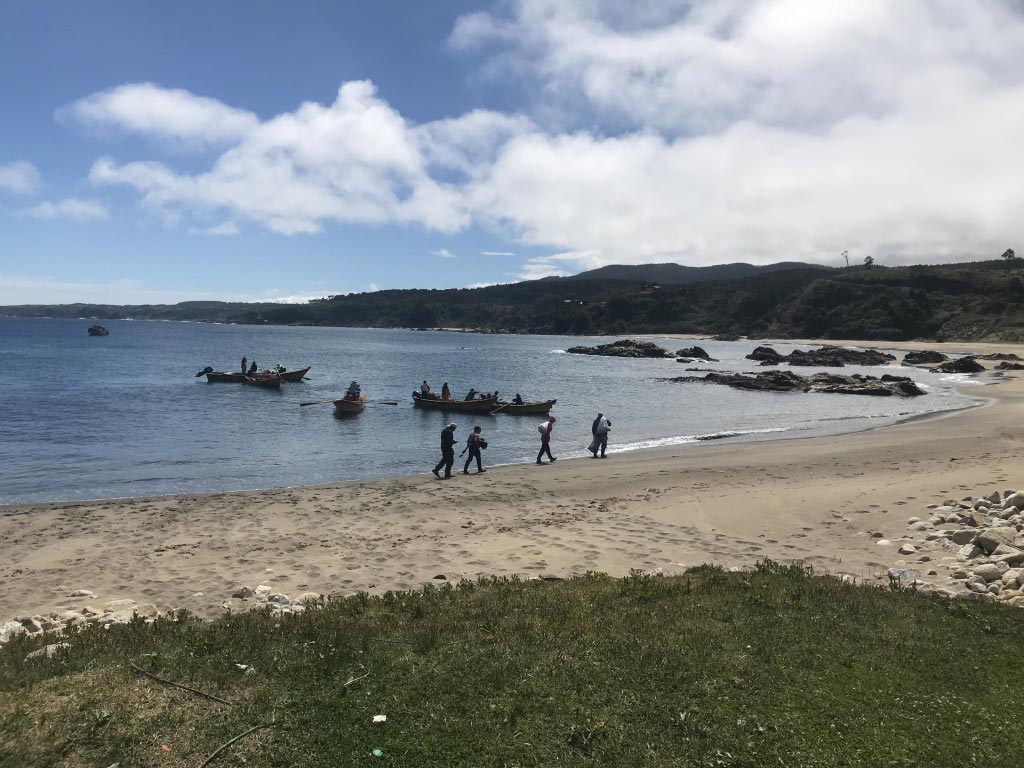
The gathering also had a special moment by the sea, at Las Cujas beach: a collective splash lit up by a few fleeting rays of sunshine. It was an idyllic moment, between fine white sand and waters that, though icy, sparkled with a turquoise color that invited them to dream big.

Paula Carola Rojo Núñez comes from a fishing family that goes back several generations. Her grandfather, her father, her uncles and her brother have all led lives tied to the ocean, and today she is proud to carry on that tradition.
“What I take away from this gathering are the different experiences: hearing the stories of fellow women who have had a very hard time, and so trying to organize ourselves more,” says Paula.
The women from the organizations in the Valparaíso Region TURF-Reserve Network were joined by participants from other coves around the country, as well as representatives of organizations such as Maritorias, Fundación Mujeres de Mar and Comunidad y Biodiversidad (COBI) from Mexico, which has spent more than 20 years promoting marine conservation and sustainable fisheries management alongside coastal communities.
“I see many similarities between community-led conservation processes in Chile and Mexico, in that women are involved and face similar challenges: they aren’t listened to, there is little inclusion and openness in these processes, but they still do it and are motivated to keep going,” says Mariana Suasnávar Imán, Climate Change Specialist at COBI, adding that “women make up a very high percentage of those working in marine conservation and sustainable fishing nationwide, so it’s important to include them in these decision-making processes so their voices are heard.”

Representatives also came from the Network of Fish Refuge Zones of the State of Yucatán and the Sirenas de México collective, made up of women dedicated to scientific and community diving. They shared their experience in designing fish refuges and in women-led biodiversity monitoring, tools that make evidence-based decisions possible.
“I think we all share that feeling of conserving, of caring… We have the same vision, the same love and passion for the sea and for our refuges,” said Elba López Galaviz, community diver and representative of Sirenas de México. “I feel I’ve left a little seed with each of them, always inspiring others and also being inspired myself by their work, their struggle, everything that has brought them here… If people turn to look at us and see that we are at the center of all the activities, they will also be encouraged and take the initiative to replicate the tools we have,” she added.
This gathering will be remembered as the first spark of something bigger: conversations born of trust and mutual recognition that strengthen women’s leadership, autonomy and participation in marine conservation processes. It is a first step toward shaping, together, a work plan that makes their roles visible, opens more spaces for dialogue in the coves and strengthens their work in every stretch of coast and in every TURF-Reserve.
RELATED NEWS