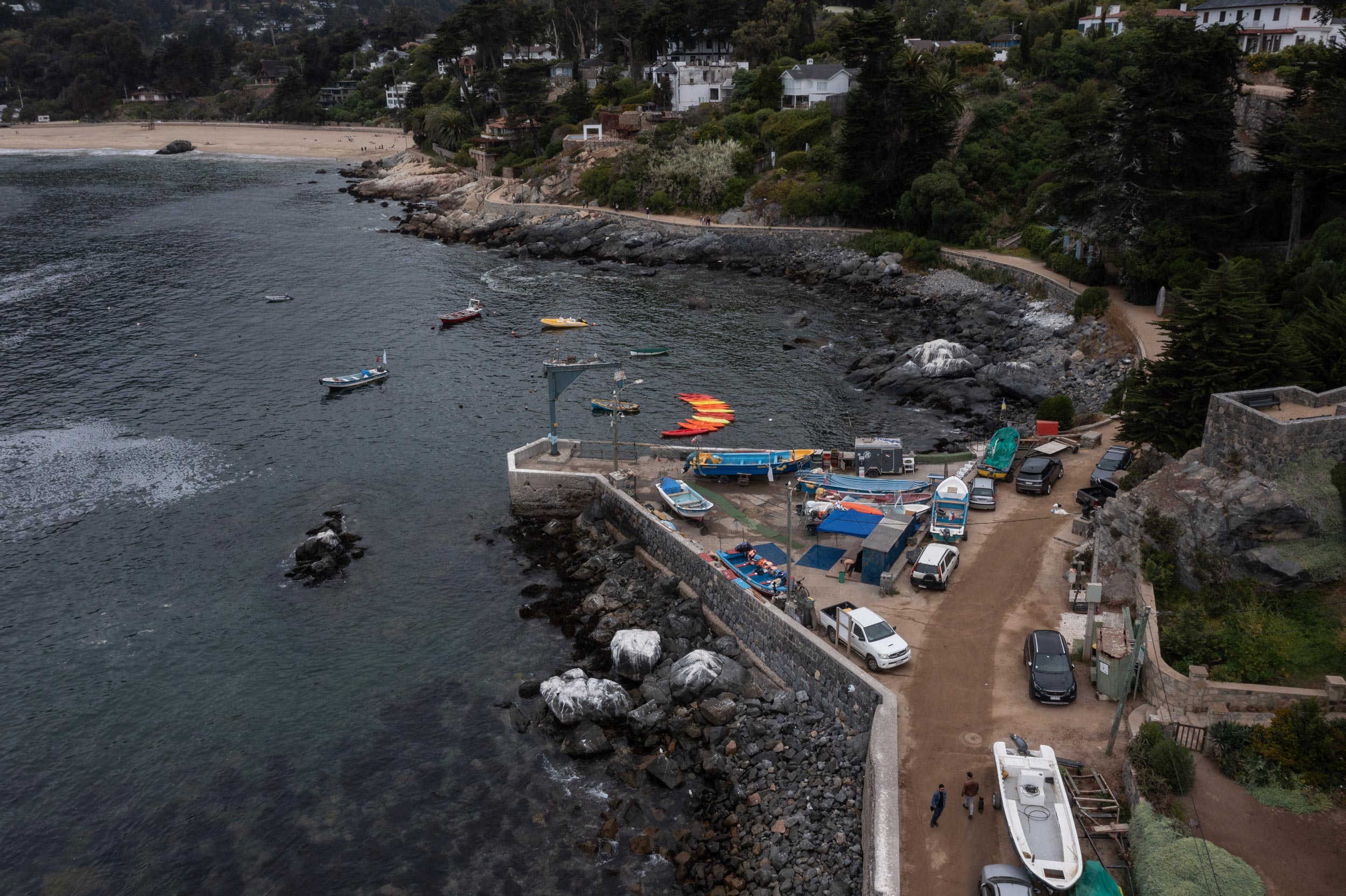
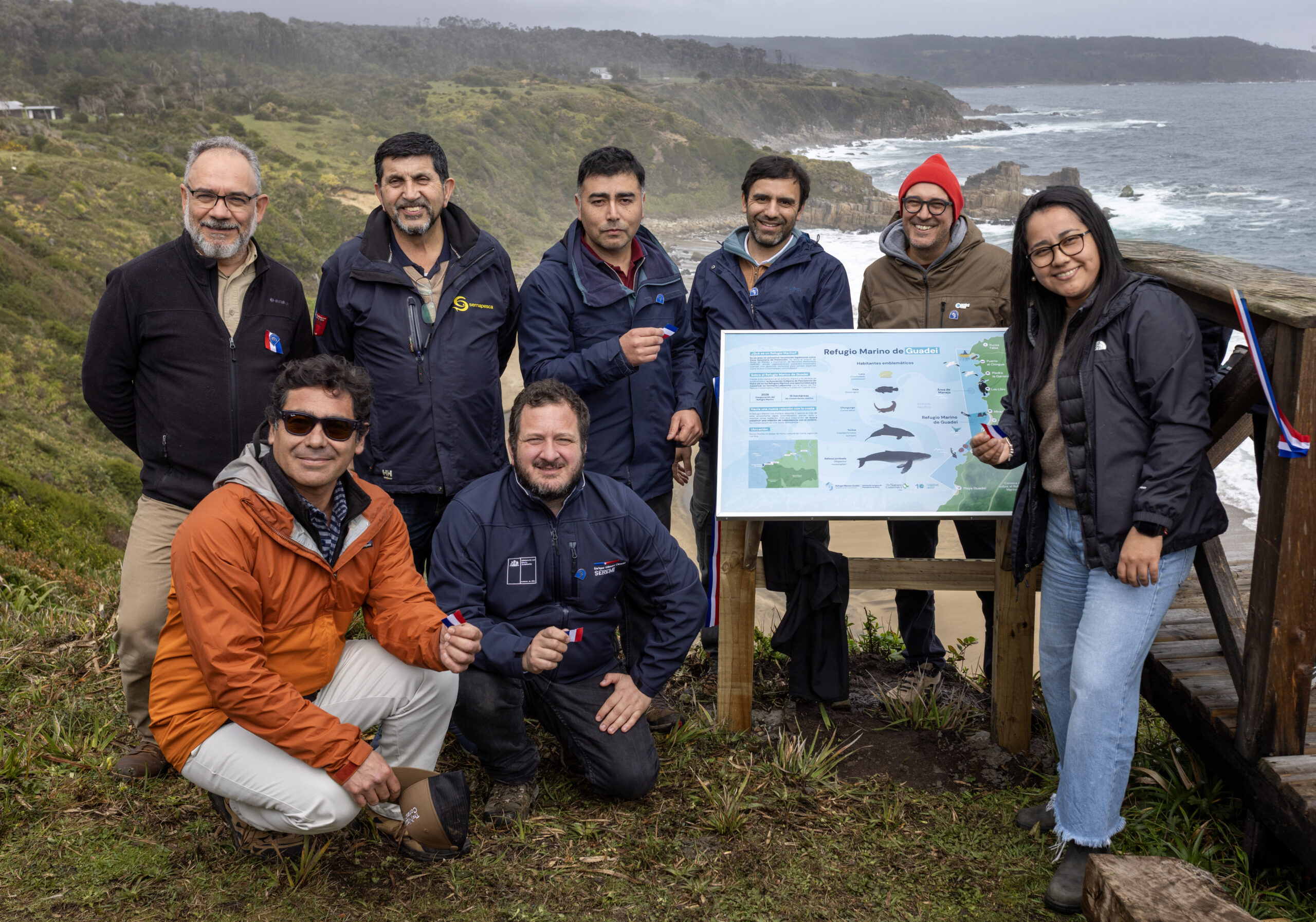
Next to the Route 5 North highway, amid the deafening roar of cars and trucks, a dead-end street leads to a warehouse that serves as the headquarters of the La Polcura Artisanal Fishers Union. There, far from the rucos (shelters) where kelp is laid out to dry in the sun and sway in the wind, a group of fishers, both men and women, is looking over a map of this coastal area, which has become an extension of their own backyards.
Armed with pencils, knowledge and stories of the sea that washes this coast of yellow earth, which gives the place its name, they reflect on and discuss the future, picturing the spot where they could develop a small-scale aquaculture initiative (known in Chile as APE) together with professionals from the Universidad Católica del Norte’s Aquaculture in Management Areas Program.
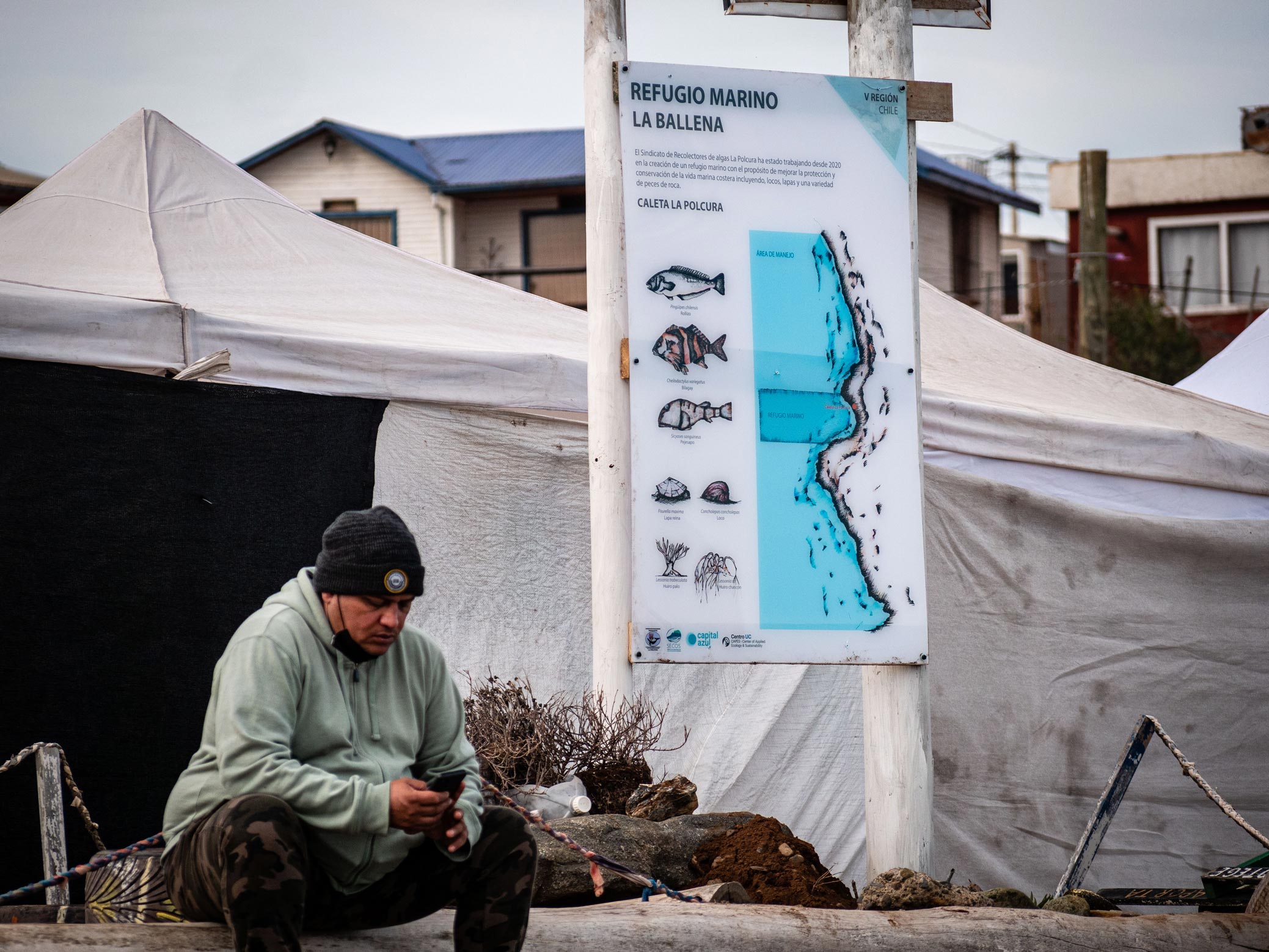
The enthusiasm is palpable in the air and in the genuine interest that has been sparked within the union. This is a great opportunity for this artisanal fishing organization: it could be a concrete step toward moving from extracting from the sea to farming it. It is a milestone in tune with the work that, since 2020, this group from the village of La Ballena, at the northern gateway of the Valparaíso Region, has been carrying out with the La Polcura TURF-Reserve in partnership with Capital Azul Foundation.

This participatory “social mapping” workshop is part of the project “Support for building responsible marketing capacity and value recovery with artisanal fishing organizations in the Valparaíso Region,” led by Capital Azul and Future of Fish (FoF), with support from BHP Foundation, with the firm aim of strengthening the union’s commercial, organizational and productive potential.
Since 2024, this journey has gone through key stages. First came an in-depth assessment, involving interviews, community dialogues and fieldwork to identify gaps and strengths, as well as gathering relevant information to evaluate organizational maturity, with the aim of jointly proposing commercial and productive improvement projects with an emphasis on responsible fishing and care for the TURF-Reserve.
What emerged was not just a technical assessment, but a living portrait of a community that wants to be empowered and more resilient without giving up its roots. It is a group of people with history, a trade and a deep bond with the sea, who are beginning to understand that sustainability is neither an abstract nor an empty concept: it is both an urgent need and an opportunity.
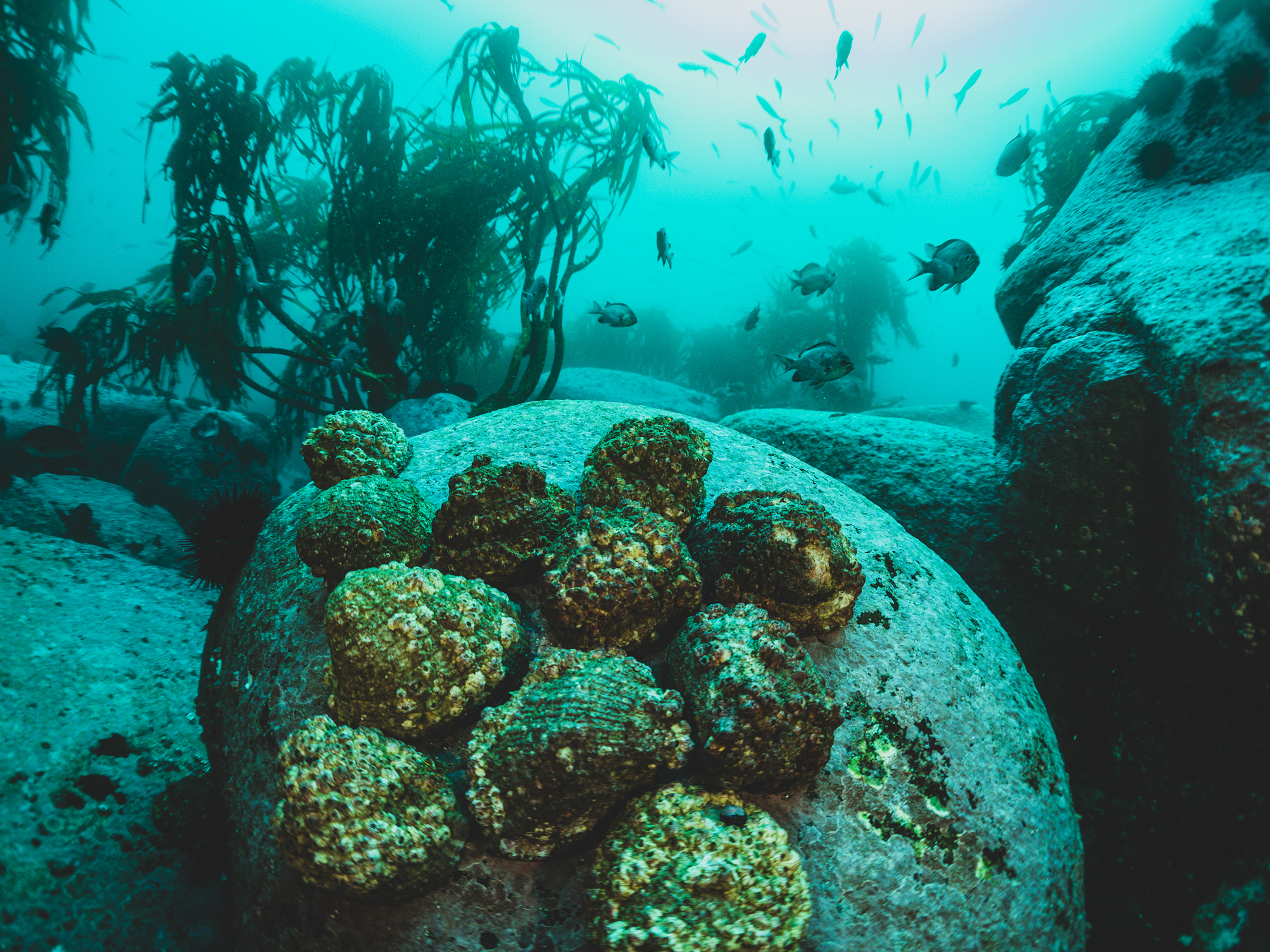
“The development of this project has been a gradual process, which began by identifying the union’s productive potential and the priority interests expressed by its members. In this context, the TURF, with its production of locos (Chilean abalone), and the TURF-Reserve are currently the productive and socio-environmental core of the organization,” explains Iván Greco, associate researcher at FoF and one of the people in charge of diving into and examining the inner workings of the La Polcura union.
The assessment gave rise to a collectively built roadmap: a work plan prioritized by the union’s fishers, men and women, which now serves as a compass for future actions and explores areas such as responsible marketing, community-based tourism and small-scale aquaculture. In that participatory spirit, the third stage of the project focuses on implementing those priorities, providing concrete tools to add value, improve marketing conditions and open up new opportunities for sustainable local development.

A STUDY TRIP
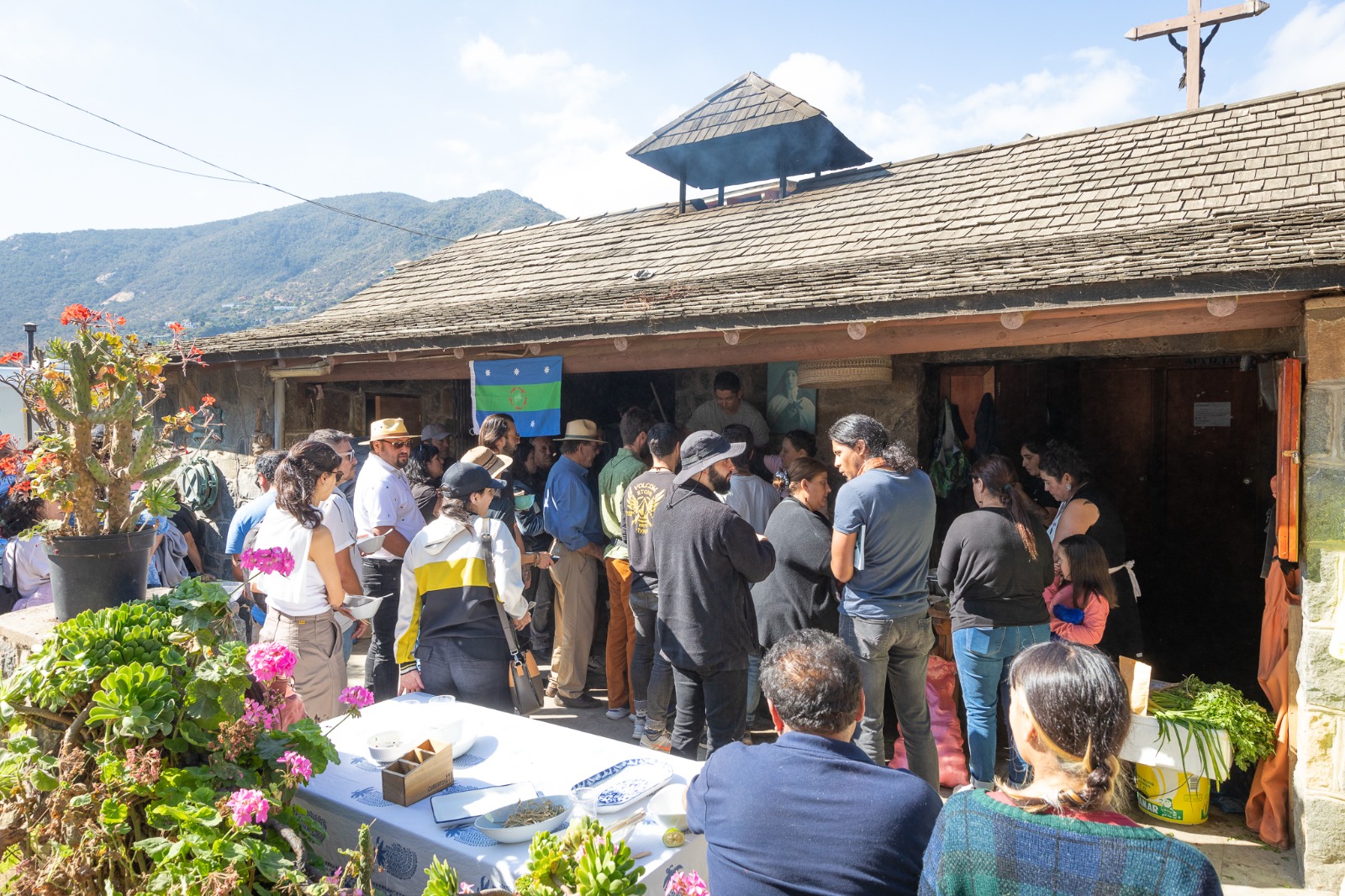
One of the first activities carried out under the collectively built roadmap was a technology tour, organized by FoF, which took a group from the La Polcura union to the coast of Caleta Chañaral de Aceituno, in the Atacama Region. There, in addition to learning about an inspiring experience of community-based tourism linked to marine conservation, they shared valuable lessons with a community that, like them, has decided to care for the sea that sustains it.
Among sea lion skin rafts, fishing gear and stories of the sea, the visit began with a tour of the “Roberto Álvarez” museum room, where they learned about the history of the Chango people. Then, accompanied by local fishers, they sailed the waters of the Isla Chañaral Marine Reserve. It was a journey full of wonder: whales, Humboldt penguins, sea lions and a symphony of birds welcomed them as witnesses to a vibrant ecosystem.
But beyond the scenery and the encounters with wild marine life, what struck them most was the way the community has integrated ecotourism into its development model: a form of tourism that doesn’t compete with conservation but strengthens it, while generating new sources of income to improve the livelihoods of the coastal community.
The tour also included a stop in the Coquimbo Region, where they learned about aquaculture experiences with the Universidad Católica del Norte and the Tongoy Fishers Trade Association. They visited scallop farms and explored concrete possibilities for replicating initiatives adapted to their own situation.
“It was quite a challenging job, but I think we achieved a very good result: today we know what La Polcura’s concerns are in terms of productive development. This collaborative work also built trust with the union’s members and, thanks to that, an initiative that began simply as a commercial and productive assessment was able to continue through this tour,” says Rodrigo Sánchez Grez, Executive Director of Capital Azul Foundation.
The experience not only opened doors, but also strengthened ties and sparked new questions: how can the local economy be diversified without losing the soul of the trade or breaking the thread that binds them to the sea? How can they keep caring for the sea while creating opportunities for new generations? Today, in La Polcura, these questions are not left hanging. They are discussed in assemblies, pondered while gathering seaweed in the surf, dreamed about in the boats, and sketched out in projects that blend science, tradition and a deep desire to live with and relate to the sea in a different way.
Above all, the project led by FoF and Capital Azul has become an invitation to dream together: to believe in a new paradigm, one in which artisanal fishing leads ecosystem restoration while activating new economies; a paradigm that conserves, cares and grows from the community. Step by step, a more prosperous and resilient relationship is being woven with the ocean on which not only the group’s livelihood depends, but also its identity.
“It was a beautiful activity when they took us to see how scallops reproduce. It was also impressive to see how they took them out and how they kept them. We don’t have coves like the ones there, which look like lakes. Here the sea is very rough, but there are possibilities. Some more trials are going to be done here in La Ballena. God willing, it will all move forward. I think it can work,” says Silvia Otárola, a seaweed harvester and member of the La Polcura union.

NEXT STEPS TOWARD FARMING THE SEA
The map that opened up discussions and reflections within the union about a possible site for small-scale aquaculture made it possible, drawing on the participants’ own traditional ecological knowledge, to identify a suitable area for farming within the TURF. In principle, it would be located south of the TURF-Reserve, heading toward Pichicuy, where the sea still seems to hold room for new forms of care and livelihood.
“The exchange between artisanal fishers and the scientists from the university (Universidad Católica del Norte) is a great contribution, and the project is very interesting. Let’s hope the physical conditions of the sea work in our favor. We’ll see if this little project works out, but I see it very positively because it will be a good source of income,” said John Galiardi, president of the La Polcura union, adding that “we see it positively, as a new source of work. Anything that means a new work alternative for artisanal fishers is welcome in our union.”
The generous size of the TURF, 260 hectares (642 acres) where the sea embraces the coast, opens a fertile horizon for sowing the collective dreams that sprang from the work plan built side by side with the community. It is a territory of possibilities, where every wave seems to whisper that it is possible to move forward together toward a fairer, more sustainable and resilient future.
In the short term, the main task is to prepare the technical small-scale aquaculture project, which will define the final polygon, the species to be farmed and the potential production volumes. At the same time, the union will apply to the Maritime Authority for a free navigation certificate, like asking the sea for permission to keep dreaming. This document, together with the technical project, will be submitted to the Undersecretariat of Fisheries and Aquaculture (Subpesca), the body responsible for issuing the resolution that formally authorizes aquaculture within the La Polcura union’s TURF.


“Once authorization for small-scale aquaculture is obtained, a transition stage will begin in which the union will evolve from its traditional role as fishers and gatherers into that of aquaculture farmers. This change involves a process of learning and adaptation that includes not only acquiring key supplies, such as buoys, ropes and mooring systems, but also developing the technical skills needed to design and install the farming lines, seed them, monitor growth, harvest, and manage the marketing of the products. This process represents a profound paradigm shift that requires specialized technical support to ensure a successful implementation that is sustainable over time.”
Iván Greco
Associate researcher, Future of Fish
For now, both the small-scale aquaculture project and the other paths laid out in the roadmap share the same urgent need: to raise the resources to keep sailing on a steady course with hope alive. But beyond funding, there is something no one can take away from them: the shared dream of building together. That dream, woven in assemblies, conversations and gazes toward the horizon, has already taken root. And when a community stands up to dream together, the future stops being an uncertain promise and starts becoming something real.
Rodrigo Sánchez Grez, Executive Director of Capital Azul Foundation, puts it this way: “The most valuable thing about this process is that it brought in members who had not been involved in the work of the TURF-Reserve before, and also sparked the interest of key stakeholders in the cove and in the local community of La Polcura. We feel that a new dimension of work has opened up, with enormous potential. It is at this intersection between conservation and local development that TURF-Reserves can become true catalysts for productive diversification, bringing new opportunities, especially for women and young people who today want to take the lead in the future of their communities.”
RELATED NEWS