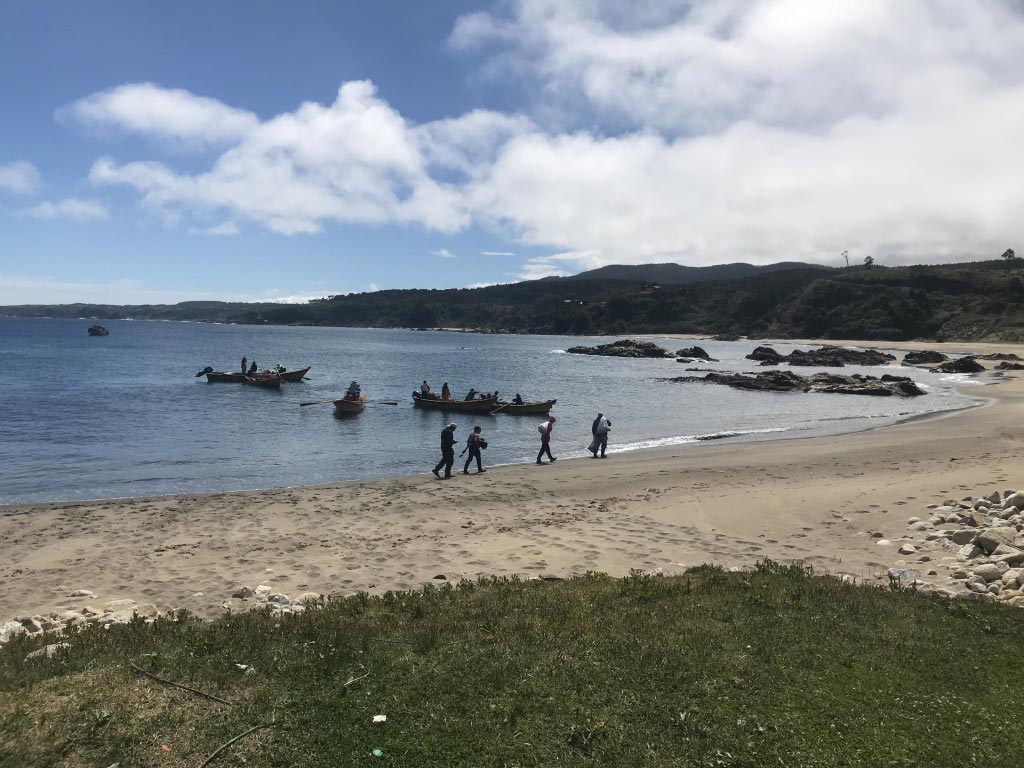
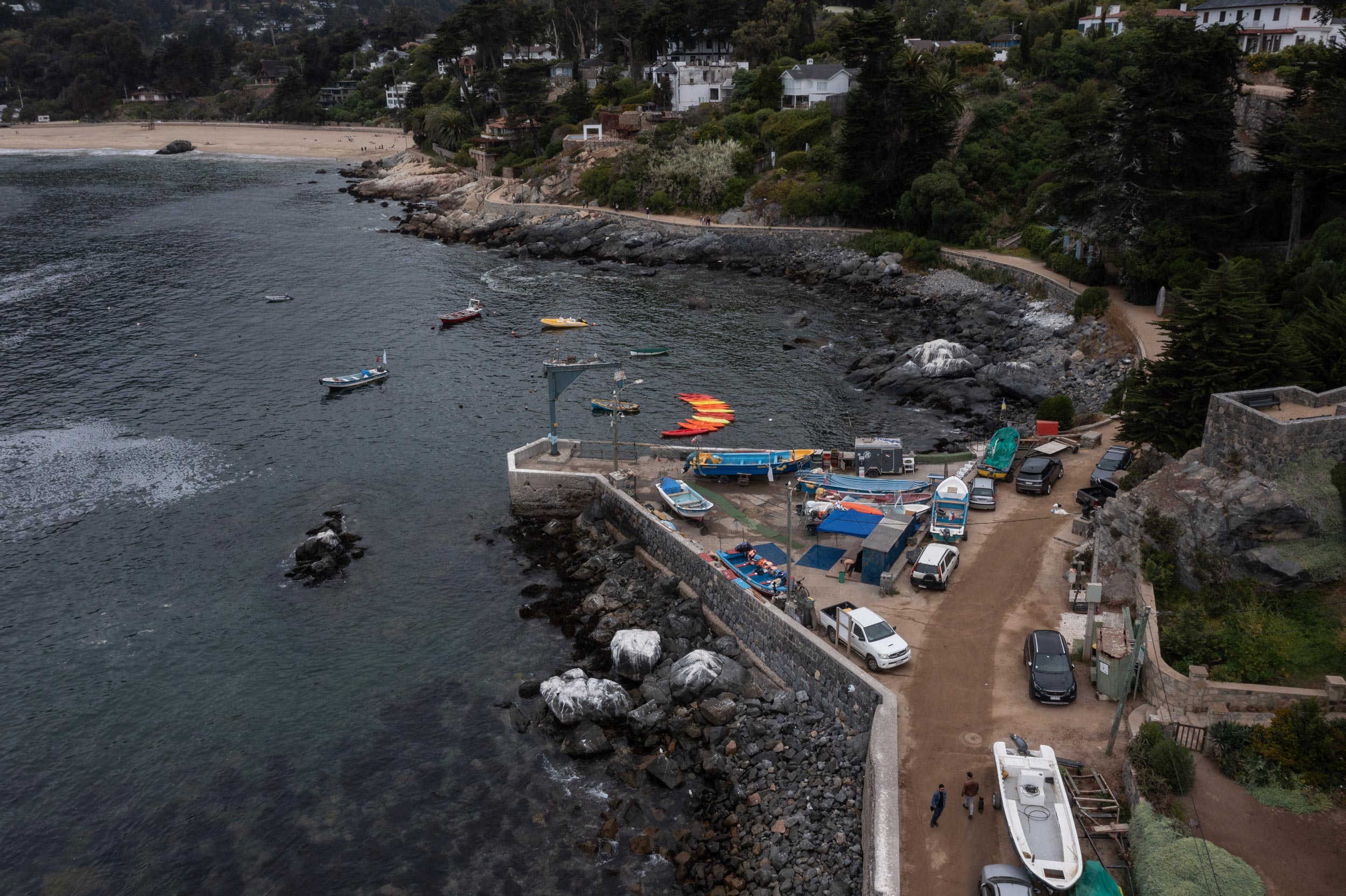
On a clear but cold summer morning, around 40 members of the Ventanas and Maitencillo fishers unions gradually gathered at the Ventanas Fishers Union headquarters for an exchange marked by camaraderie and a vision for the future of TURF-Reserves.
The two groups represent the two demonstration experiences that the GEF Incentives for Biodiversity Conservation Project, executed by the Ministry of the Environment and implemented by UNDP, is carrying out in central Chile with Capital Azul Foundation as conservation guarantor. They were invited to the workshop to share experiences and identify technical tools and knowledge related to the methodology for identifying ecosystem services, as well as to understand the real needs for strengthening sustainable local economies.

All of this sought to lay the groundwork for the new model of economic incentives established by the SBAP Law (Law No. 21,600), which includes Payment for Ecosystem Services, Biodiversity Offsets and Certifications as instruments so that conservation can also be good business for local organizations that implement sustainable productive practices that benefit the environment.
Under this new regulatory framework, protecting the sea is no longer just an act that depends solely on the goodwill and genuine interest of a few, but becomes a development opportunity in which artisanal fishers are a key ally for the conservation and resilience of coastal ecosystems.
The gathering included a technical session led by María Ignacia Rivera, an academic at the Pontifical Catholic University of Valparaíso (PUCV), with a talk titled “The value of coastal and marine ecosystems: an ecosystem services perspective.”

The activity was also designed as a space for horizontal dialogue. Through participatory mapping and traditional games that invited honest and open exchange, fishers identified and understood how their TURFs (Territorial User Rights for Fisheries, known in Chile as AMERB), as well as their TURF-Reserves or Voluntary Protection Zones, are delivering benefits that go far beyond harvesting natural resources.
Although in practice this is nothing new for the Ventanas and Maitencillo unions, the terminology of ecosystem services is, so bringing these concepts down to earth was key in designing the workshop methodology. Little by little, participants explored provisioning services (a healthy ecosystem that ensures food availability), regulating services (such as protection against storm surges) and cultural services (linked to scenic beauty, spaces for recreation and tourism, environmental education, and a sense of belonging and attachment to the territory), all key elements for the resilience of coastal communities.

“We held a workshop for the Maitencillo and Ventanas unions to share experiences, so we could learn where they stand in terms of their knowledge of the ecosystem services approach. This is very important because it is part of the GEF Incentives for Biodiversity Conservation project, which supports the creation of instruments based on this conceptual framework that could eventually deliver concrete benefits to organizations with TURF-Reserves,” explained Rodrigo Sánchez Grez, Executive Director of Capital Azul Foundation.
Throughout the day, members of both unions also worked on identifying the tools they lack, from training to infrastructure, so that TURF-Reserves can also become engines of sustainable local development.


This gathering between the Maitencillo and Ventanas artisanal fishers unions is essential. As the GEF Incentives Project, we designed this workshop not only as an exchange of experiences, but also as a moment for members of both unions to think together about possible payment for ecosystem services initiatives that could feed into the model we are seeking to design in a participatory way. A model that, on the one hand, draws on all the knowledge gained through their work with TURF-Reserves in their TURFs and, on the other, reflects the very different challenges both face in artisanal fishing with a focus on conserving marine resources.
José Valencia, marine coordinator, GEF Incentives Project.
For his part, Eugenio Silva Pinto, president of the Ventanas Fishers Union, said: “We hope the results of the work we did, this brainstorming, can turn into progress for the TURF-Reserves that matter so much to us, because it is an important contribution, not just in the long term but also in the short term. I dare say so based on our experience and what we have already achieved: we are convinced of the results of caring for the TURF-Reserves, because it is aimed precisely at conserving each and every species.”
The event closed with a clear commitment: to keep weaving this network of collaboration. The information gathered will be the compass for developing a capacity-building plan, ensuring that every step we take toward community-led marine conservation is rooted in the knowledge and needs of those who live from the sea.
RELATED NEWS