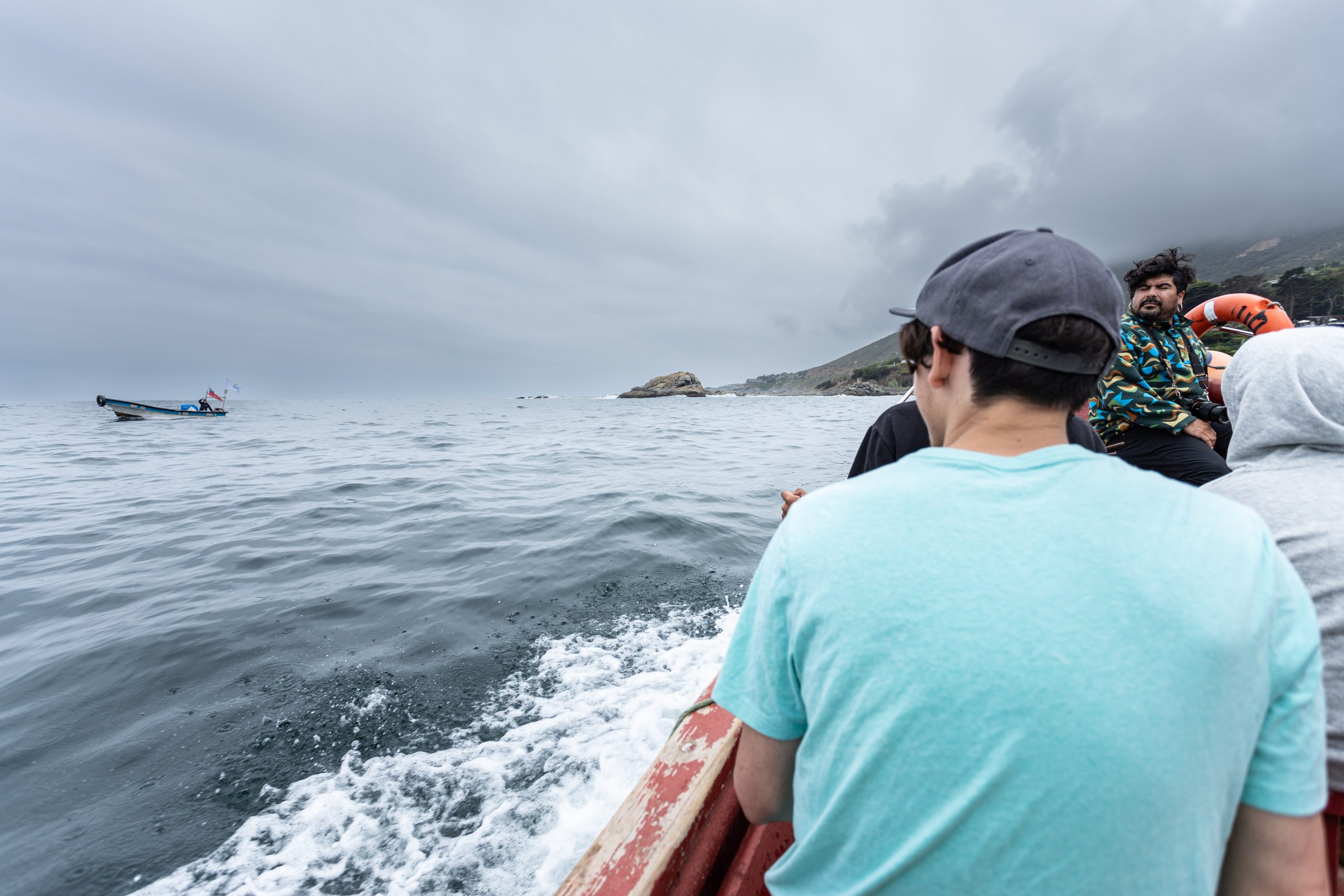
Along a winding coast, long, lonely beaches of pale sand break up the dominance of the rugged tapestry of evergreen forest that merges into the cliffs above the rough sea. Here, the ocean and the wind strike with relentless force, shaping the landscape and setting the rhythms of nature, and at times the roar of the wild surf is deafening.
But this wild, remote coast of Chiloé, a few kilometers south of where the gentle Chepu River meets the sea, also breathes a deep calm in the song of the chucao tapaculos scurrying through the damp leaf litter of the Chiloé forest and in the flooded wetlands and marshes that emerge through the mist.
There, initiatives such as Chiloé National Park and Ahuenco Park have emerged as a way to care for this deeply alive territory, where nature still sets the vibrant pulse of daily life. However, until very recently, that conservation had found no echo in the marine environment. What once teemed with marine life has gradually begun to show warning signs, and today TURFs (Territorial User Rights for Fisheries, known in Chile as AMERB) are among the few places where harvesting has been sustainable.

“It’s true that in the area there are TURFs that are quite productive for loco, which is our main species, but we have realized that this resource is only remaining inside the TURFs. In open-access areas it is very scarce, almost impossible to find. Even in terms of size, finding an adult loco is practically impossible outside the TURFs. It has been overexploited to the point that there are hardly any resources left in open-access areas,” says Miguel Villarroel with deep regret. As president of the Mar Adentro del Río Chepu Fishers Union, he has witnessed this decline.
This reality confirms what science and experience in central Chile have shown: TURFs are effective, but they need strictly protected core zones, TURF-Reserves, to ensure regeneration and spillover into surrounding areas.
That is precisely one of the reasons why this artisanal fishing group is starting the process to create a TURF-Reserve in the Chepu Sector C TURF. It is a milestone for marine conservation in Chile: the first TURF-Reserve inspired by the model promoted by Capital Azul Foundation but implemented independently under the new Benthic Law (Law No. 21,651), which recognized TURF-Reserves as Voluntary Protection Zones.
The future Chepu TURF-Reserve is the result of a collaboration between the Mar Adentro del Río Chepu Fishers Union and the Center for the Study and Conservation of Natural Heritage (CECPAN), and it is one of the demonstration experiences of the GEF Incentives for Biodiversity Conservation project.
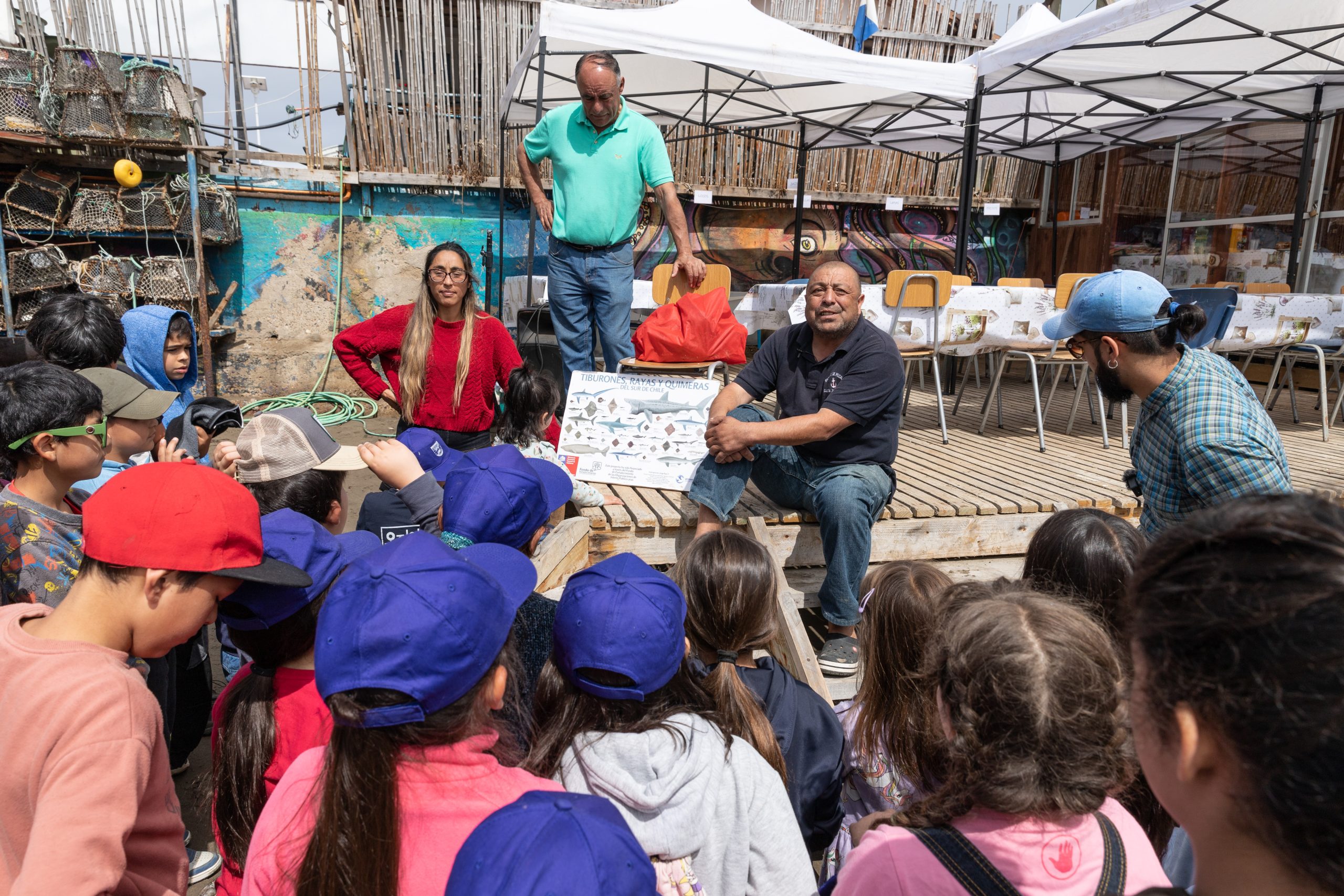
To learn more about this community-led marine conservation model, representatives of both organizations took part in October in the Third International TURF-Reserves Meeting. It was an opportunity to hear, from the protagonists themselves, how the work promoted by Capital Azul Foundation and the partner organizations of the TURF-Reserve Program has unfolded.

“It’s very interesting because we are just starting with this vision in the south. I think we are the pioneers in the Los Lagos Region in implementing a TURF-Reserve within one of our TURFs,” explains Miguel Villarroel of the Mar Adentro del Río Chepu Fishers Union.
His colleague Oscar Vega adds that “we came to gather information from the other organizations that have been working on this much longer. You can see that (TURF-Reserves) have worked well here in the north, and we hope it will work in the south.”

This gathering is thus taking shape not only as an opportunity to strengthen the TURF-Reserve model, but also as a nursery for new initiatives that can expand and boost the network on a national scale.
For Rodrigo Sánchez Grez, Executive Director of Capital Azul Foundation, this step marks a milestone in the history of TURF-Reserves, confirming that the model can scale at a time when three incentives for biodiversity conservation are also expected to be launched soon.


Seeing other communities, like Chepu’s, take ownership of this co-management tool and implement it independently is the best proof that the path we have charted is bearing fruit. This milestone is not isolated; it is the result of a shared learning platform and of a regulatory influence we managed to consolidate with the recognition of TURF-Reserves in the Benthic Law. Although Chepu is moving forward independently, its initiative joins the spirit of the TURF-Reserve Network we are weaving along Chile, showing that conservation led by artisanal fishers is a scalable and necessary model for the future of our coast and the resilience of the communities that live there.
Rodrigo Sánchez Grez
Executive Director
Capital Azul Foundation
This expansion process is directly linked to a new challenge for Capital Azul Foundation: launching the TURF-Reserves Academy. The initiative seeks to systematize and transfer the methodology developed over the years, providing concrete tools so that communities, technical teams and local leaders themselves can multiply these conservation and co-management areas along the coast of Chile, just as is beginning to happen in Chepu.
A CYCLE COMES FULL CIRCLE: FROM TURFS TO TURF-RESERVES
To take part in the Third International TURF-Reserves Meeting, Miguel Villarroel traveled again from Chiloé to the Valparaíso Region, repeating a journey that marked his life two decades ago. Twenty years ago, he was part of a pioneering delegation that toured the central coast to learn how TURFs were implemented, just as the Chiloé Archipelago was beginning to look toward this new form of management. Fishing coves such as San Antonio, El Quisco, Horcón, Ventanas and Maitencillo were the classrooms where he learned from that experience firsthand.
“Having the chance to return to the central coast, this time to learn about the work being done for protection, so that resources are sustainable over time, is wonderful. It’s wonderful because these unions already have the experience and are passing it on to us so that we can implement it in the process we are involved in today (with the TURF-Reserve),” says Miguel Villarroel.

Just as 20 years ago, what drives them is a shared vision of the future. Miguel clearly explains the biological effect they are seeking: “The idea is for the resource to persist over time by creating a protected, hands-off zone where no harvesting takes place so the resource can regenerate. And from there it can reproduce, benefiting our TURFs and also open-access areas, because when these resources reproduce, the larvae drift in the currents for a while, which means they won’t settle only within our area but will spread along the whole coastline.”
More than fishing: diversification and resilience
But Chepu’s vision goes beyond the recovery of the loco. In an area of wild and generous nature, the TURF-Reserve is shaping up as an engine for economic diversification through special-interest tourism, breaking the exclusive dependence on harvesting.
“In the TURF where we are implementing this TURF-Reserve there is one of the penguin colonies where Humboldt and Magellanic penguins coexist, and it’s almost the last frontier where they meet in southern Chile. So for us it is an even bigger plus for focusing on tourism. Perhaps this TURF-Reserve could be interesting not only for research and for the reproduction of resources, but we could also innovate with a dive site, and since it borders this reserve with penguins, that would make it even more attractive,” explains Miguel Villarroel, who also runs Chepuxtrem, a local nature tourism business.
The Chepu TURF-Reserve thus becomes a key piece in a larger conservation mosaic, designed to benefit both biodiversity and the human communities that depend on it.
“We are leaving very satisfied, but also with huge expectations to replicate and perhaps go much deeper into what we are working on today,” says a hopeful Miguel Villarroel, who is already applying in the south the lessons learned about a new paradigm led by artisanal fishers.
RELATED NEWS