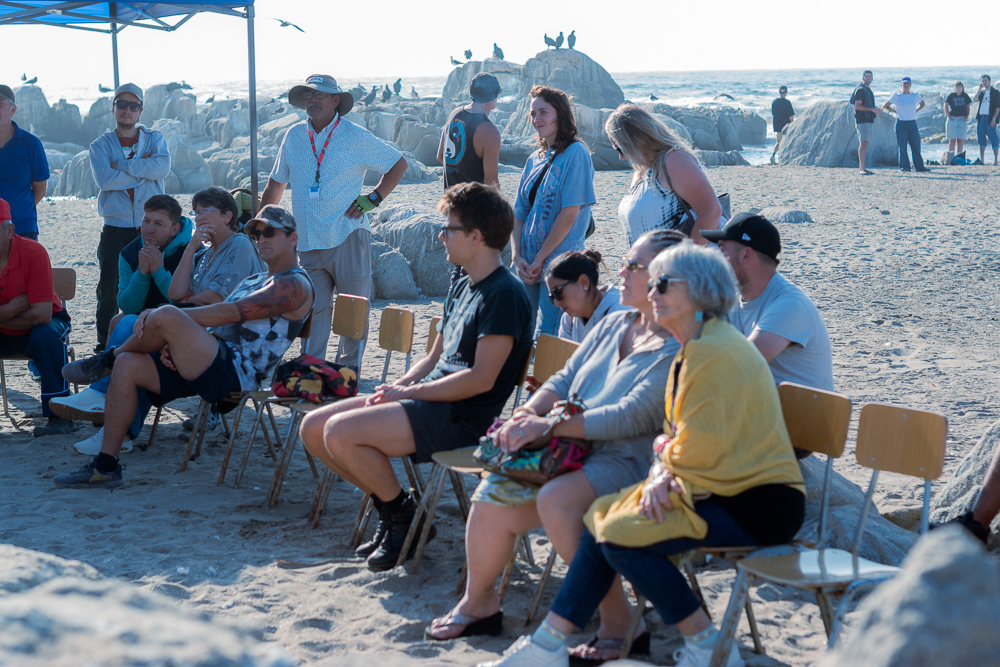
On a sunny afternoon, bathed in the warm light of summer, the community slowly begins to gather. The cries of gulls and other seabirds blend with the soft sound of the wind and the endless coming and going of the waves. Together they compose a symphony that fills the air with unmistakable coastal scents and melodies.
The tide is low, and the wet rocks of the intertidal zone dry out in the summer sun. Some of this ecosystem’s inhabitants seek shelter in cracks and crevices, while others struggle to avoid drying out in the last tide pools scattered here and there, until the ocean embraces them again.
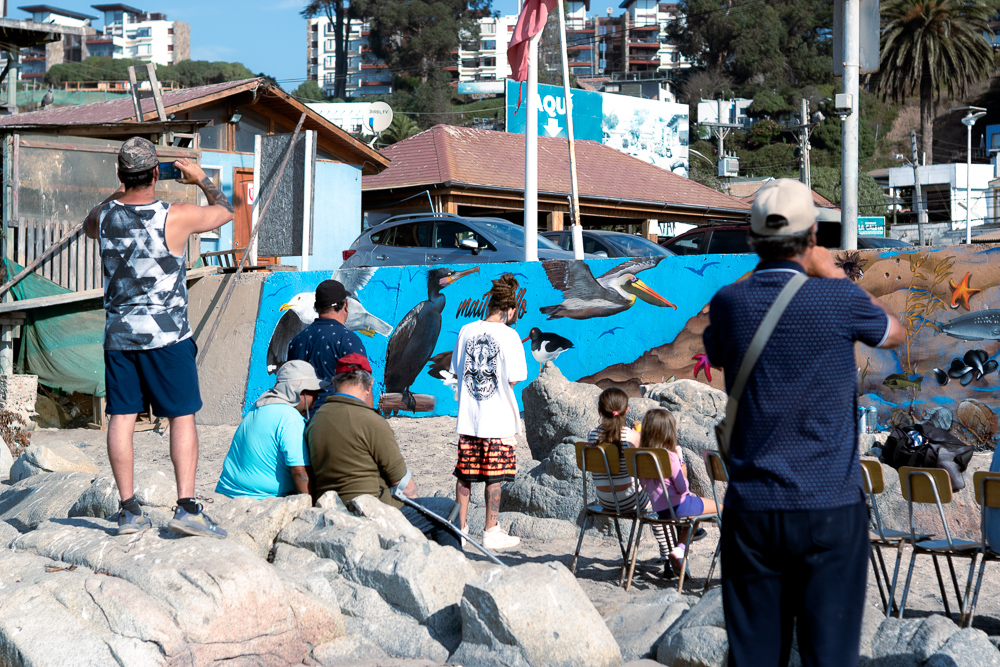
Taking advantage of the moment, small groups of intrepid summer visitors venture across the sand to the rocks where the traditional statue of Saint Peter and the cross beside it stand out, two icons of the Maitencillo fishing cove. Carried off by the sea breeze, their games and laughter are almost inaudible from a distance, just as everything is ready to begin a ceremony that honors the ocean and its people.
Facing the sea, an old gray wall that marks the boundary between the cove and the beach now has a new look. On this afternoon of gathering and low tide, a mural is being unveiled that celebrates marine life and the work born from a community-led marine conservation initiative.
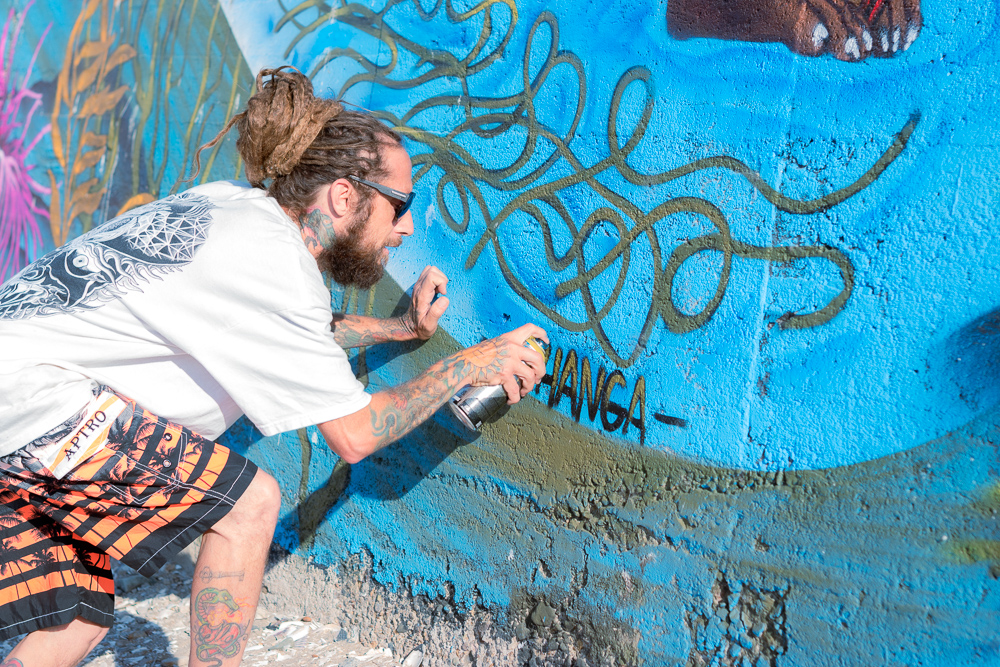
The result of a collaboration between the Maitencillo Artisanal Fishers Union, Capital Azul Foundation and Changa, the local artist who created the work, the colorful piece brings to life emblematic species of the Maitencillo TURF-Reserve and this rich coastal area. More than a painting, it is a collective testimony: a gesture of care, memory and belonging.
THE SEEDS OF A MURAL
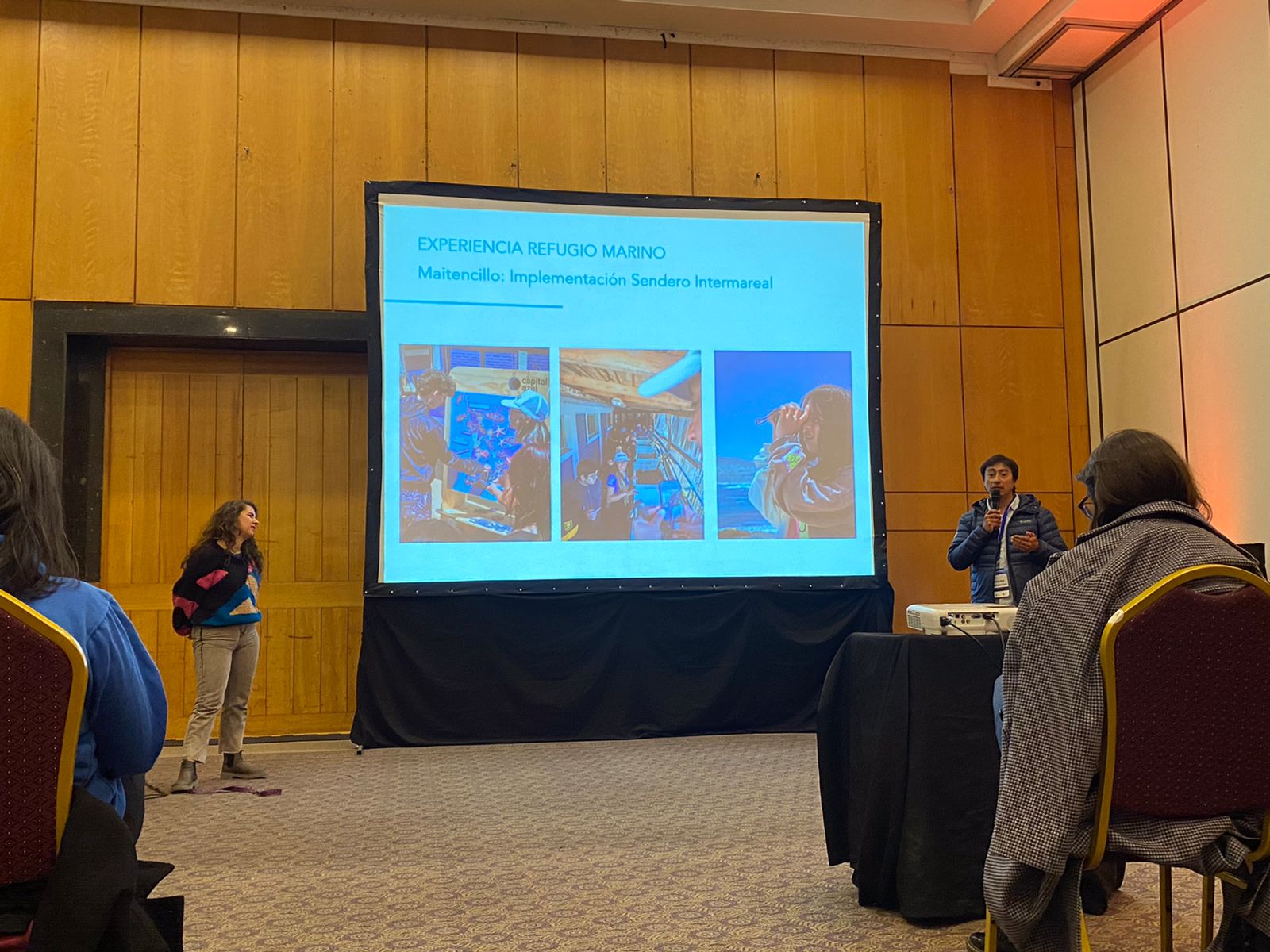
The idea for a mural came up during the co-creation of the intertidal trail that was inaugurated on the first anniversary of the Maitencillo TURF-Reserve, in November 2023. “That’s when we realized there was a wall that could serve as a chalkboard inviting people to come together. It was like an ideal canvas to start painting, and it was right where the union was already holding environmental education activities,” says Javiera Espinoza Jara, head of Education at Capital Azul Foundation.
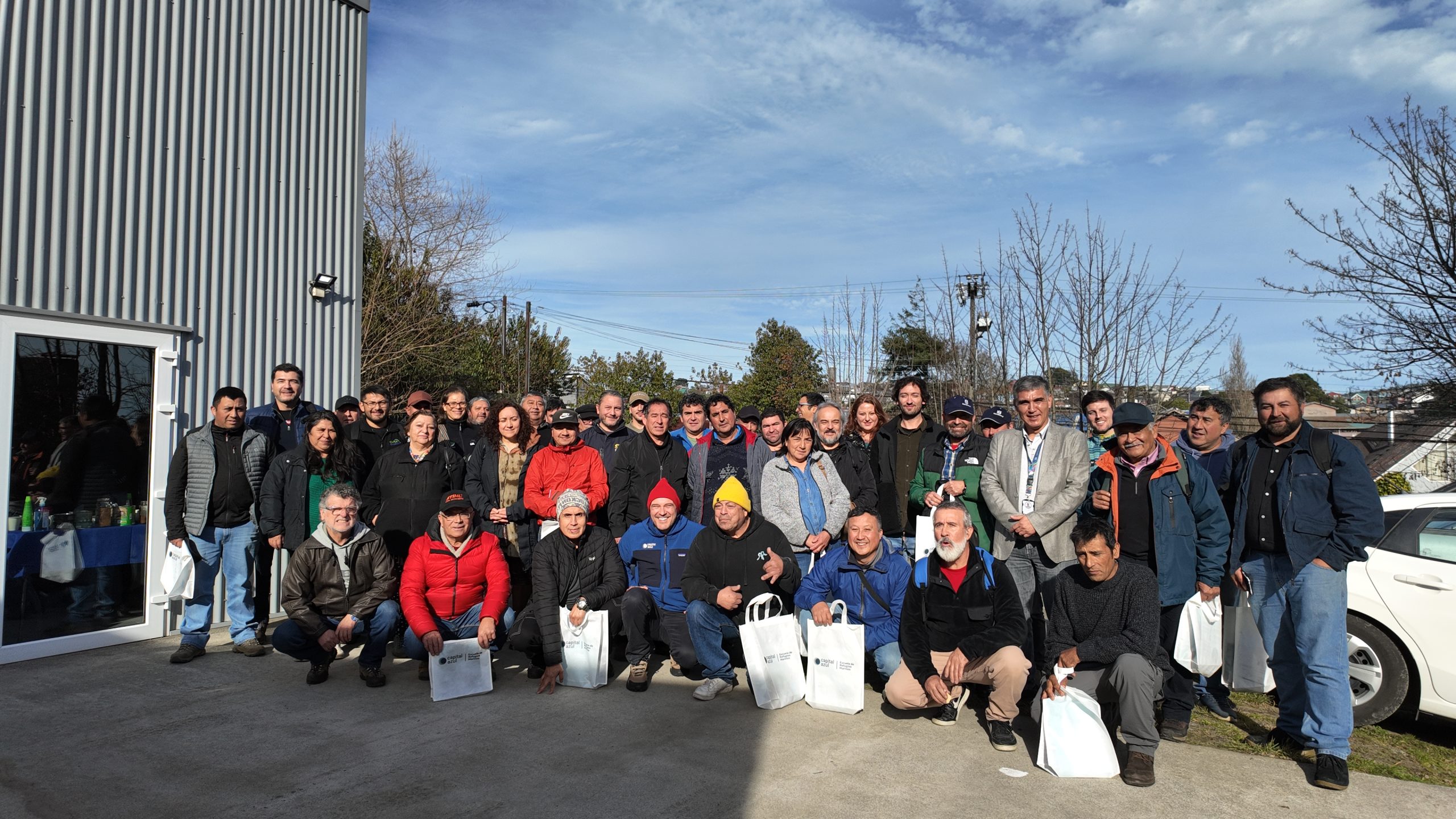
In fact, it wasn’t an entirely new idea. It had emerged a few months earlier, after some members of the Maitencillo TURF-Reserve Committee visited the Coastal Marine Research Station (ECIM) in Las Cruces. There, in the land of antipoetry (Las Cruces was home to poet Nicanor Parra), they saw that murals could be used as a tool to share science and local knowledge. That inspired them to plant a seed that, with time, experience and Changa’s brushstrokes, would finally bloom in February 2025.
There was unanimous agreement that Changa was the right artist to bring this idea to life. He is a well-known local muralist who had even worked with the union before. Today he is deeply grateful for this opportunity, which for him also brought together other ingredients, such as his love of nature, knowledge, self-knowledge and biodiversity.
“I always wanted to paint that wall,” Changa reveals. “For me, as a street artist, a graffiti artist and a muralist, walls really matter. They’re what we see every day as we walk by. They’re the environment that surrounds us and shapes us a little, and if that environment is full of gray walls, maybe we’ll go through life a bit gray. But if it’s full of colors, ideas and things that make you think, it reenergizes you and lifts you up,” he adds, sketching a deep reflection on street art and its everyday impact.
THE CREATIVE PROCESS
This collaborative work involved a series of conversations about what was important to address, which species could be found at the stations of the intertidal trail, which animals are hard to see but are present, and which species play important roles in the food web; all of this was gradually blended with elements of the cove’s identity.
Along the way, Changa also went through his own research process: reading, looking at images and a lot of learning before arriving at a first sketch, which was then enriched by other views and perspectives. “It’s a pleasure to do research and go from study to paper, to pencil, and start creating with what I’m learning. I really like that; it’s a great process, and in this case it was incredibly rewarding,” he explains.
In this collective co-creation process, Changa says he always tried to understand how the members of the Maitencillo Artisanal Fishers Union saw the work, even while putting the finishing touches on the mural. Projects like this are built collectively.
“They are the cove. They make their living from this. They go out to sea and they’re the masters of all this. They’re the teachers of what happens in the sea. They’re the ones who know about the waves, about the movement and all the fauna and flora out there. Some people have been in contact with the sea for many years, so listening to them is really important,” the artist acknowledges.
A LIVING WORK THAT INVITES DIALOGUE
The mural not only transforms the landscape; it also opens up a space for dialogue, memory and collective learning. Its colorful journey weaves together art, science and local knowledge, turning a dull gray wall into a living chalkboard. For those passing through the cove, the work invites them to stop, look and discover the species that live in the TURF-Reserve, many of them invisible to the naked eye but essential to the health of the ecosystem.
“Now we can do the tours and show everything we have. It’s like having an open-air screen. Children will understand what it’s about and what we’re caring for,” says Jorge Núñez, a member of the Maitencillo Artisanal Fishers Union, who sees the mural as a tool to support the environmental education activities linked to the TURF-Reserve.
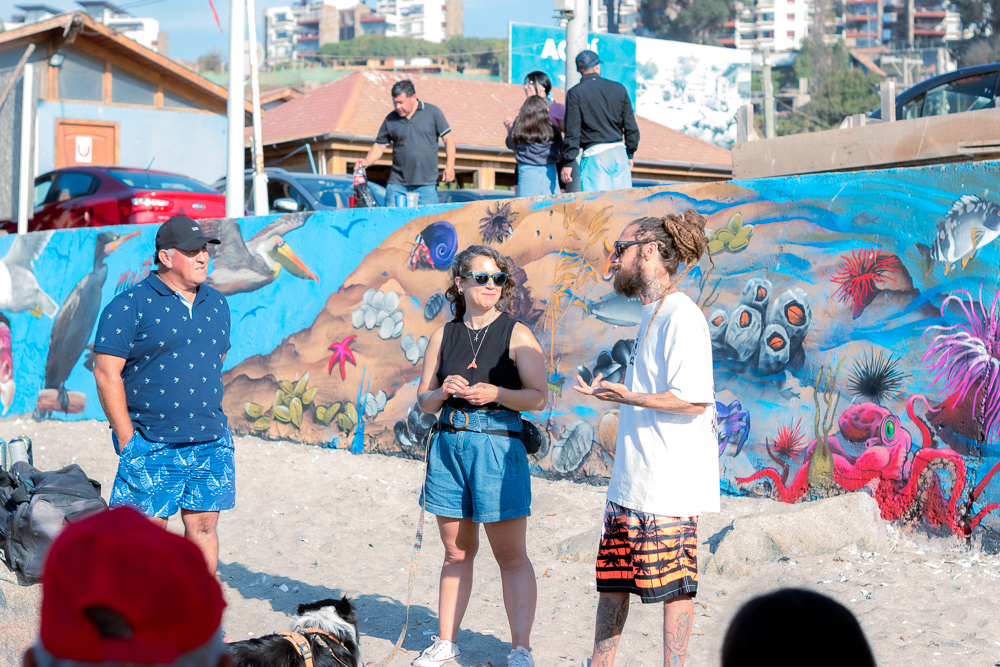
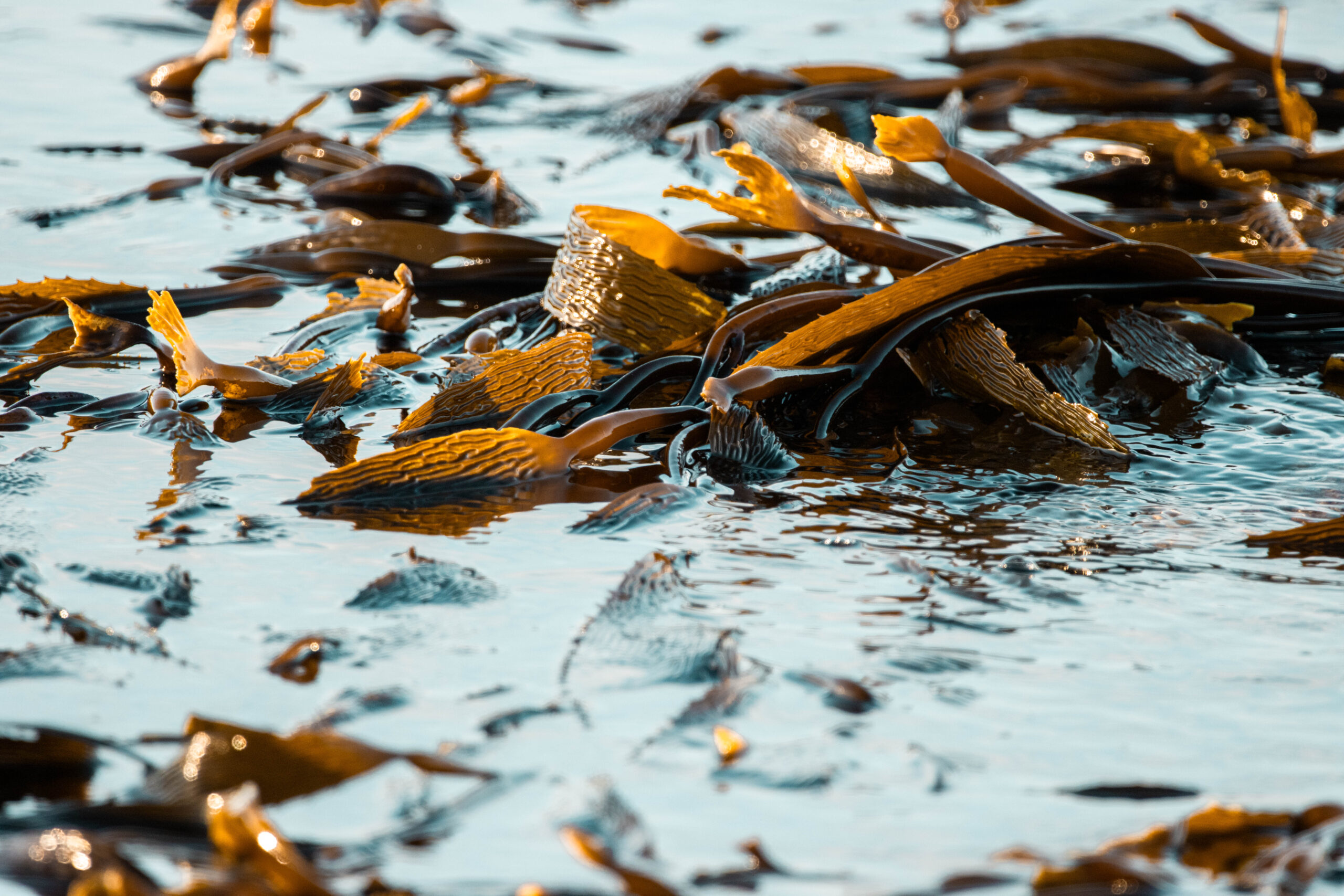
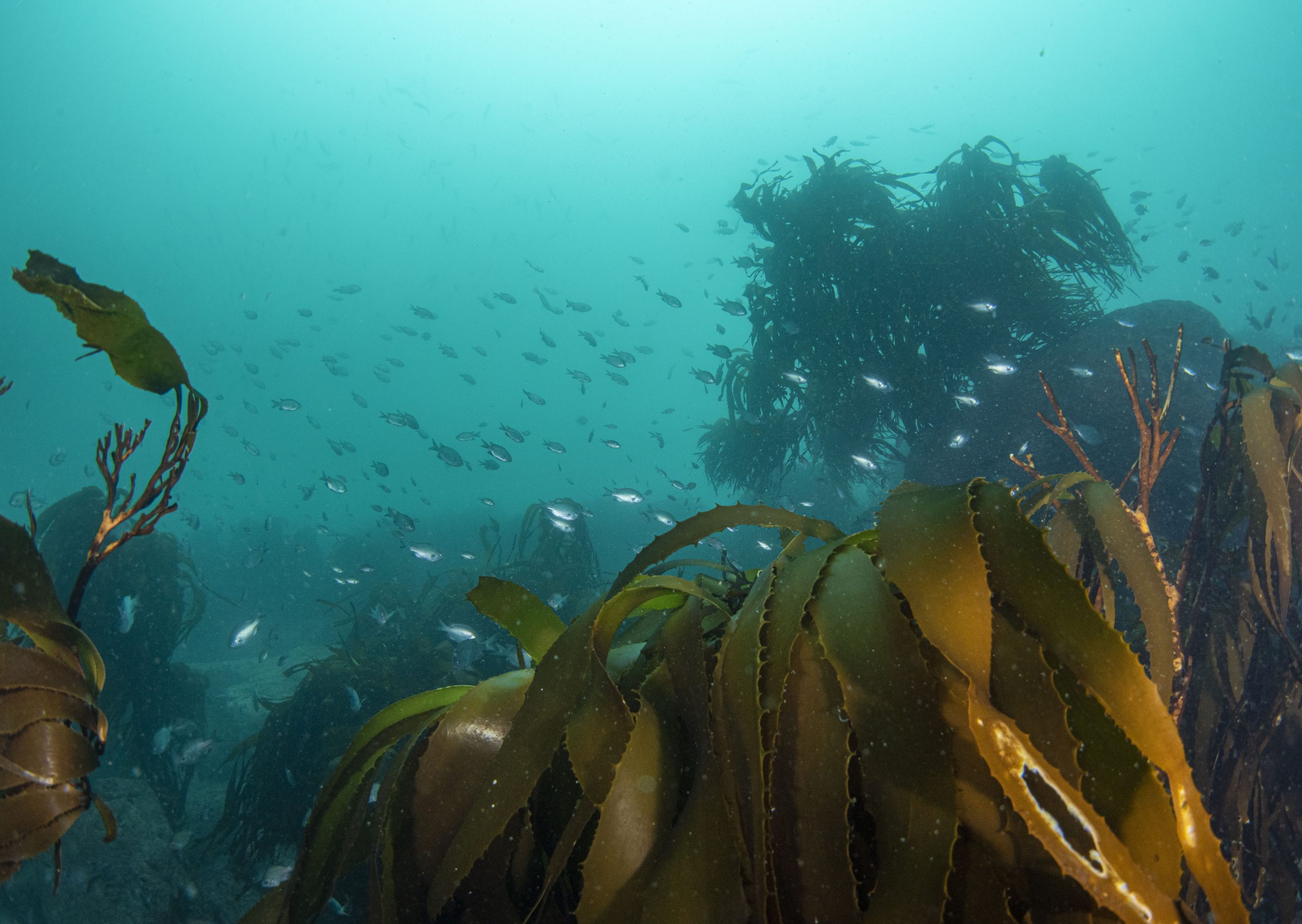
A marine otter and some oystercatchers; a Chilean sandperch and a hermit crab; a bilagay and some kelp: this is how the mural’s story unfolds, becoming a powerful and relatable image that conveys the importance of community-led ocean conservation.
“When you paint on a wall, the art is there and it’s like a magnet. No one can resist looking, stopping when someone is painting. Art has that; it has that power. Especially murals, in the street, on a wall. With that visual impact, no one is left out. So whether people like it or not, they’ll still look, they’ll form an opinion and have something to say. There’s already a connection,” Changa explains.
And he insists on one point: how different everything would be if we replaced gray cities, our sometimes colorless way of living, with vibrant streets, lively murals and small details that invite us to think. From his perspective, any ordinary walk could become an unexpected exchange, a conversation that brings out new reflections and ideas. Art shakes you up; it wakes you from lethargy.
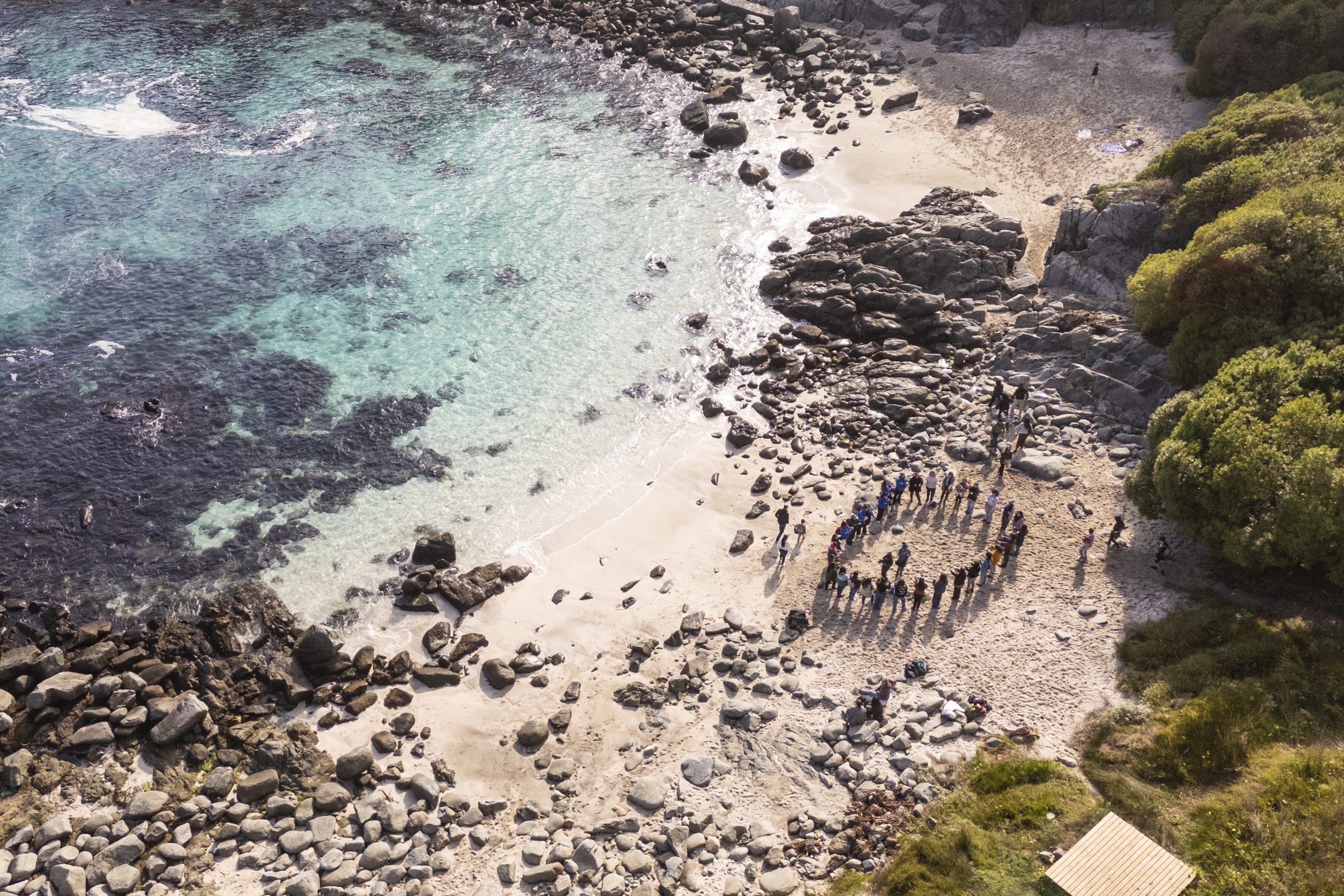
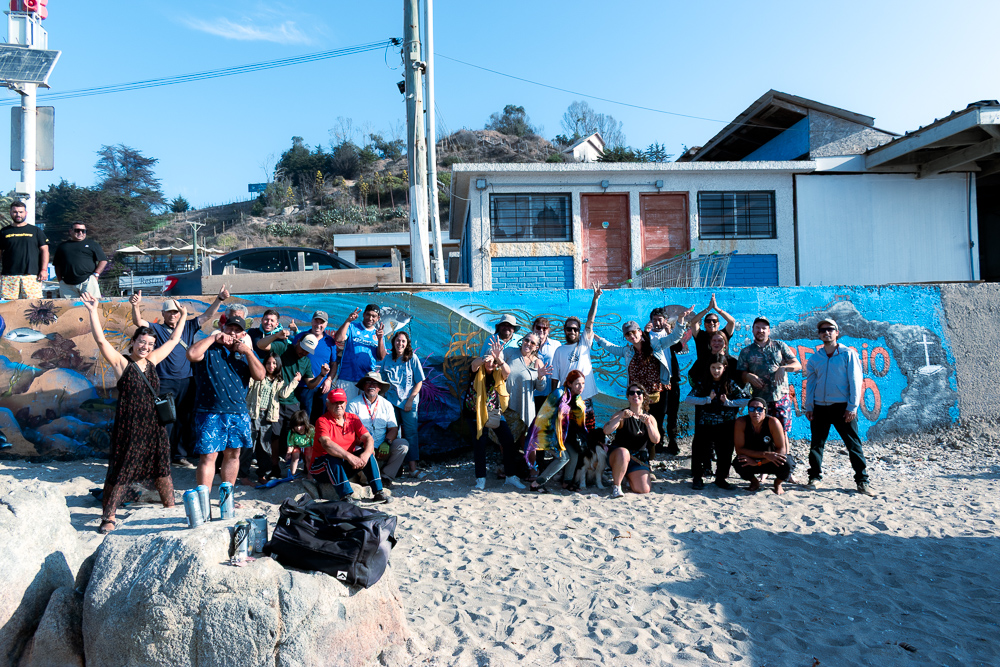
That is what happened on that same sunny day in late February. With part of the community gathered for the mural’s unveiling, conversations gradually began to flow among union members, summer visitors and neighbors. Questions arose, and curiosity, interest and wonder opened up.
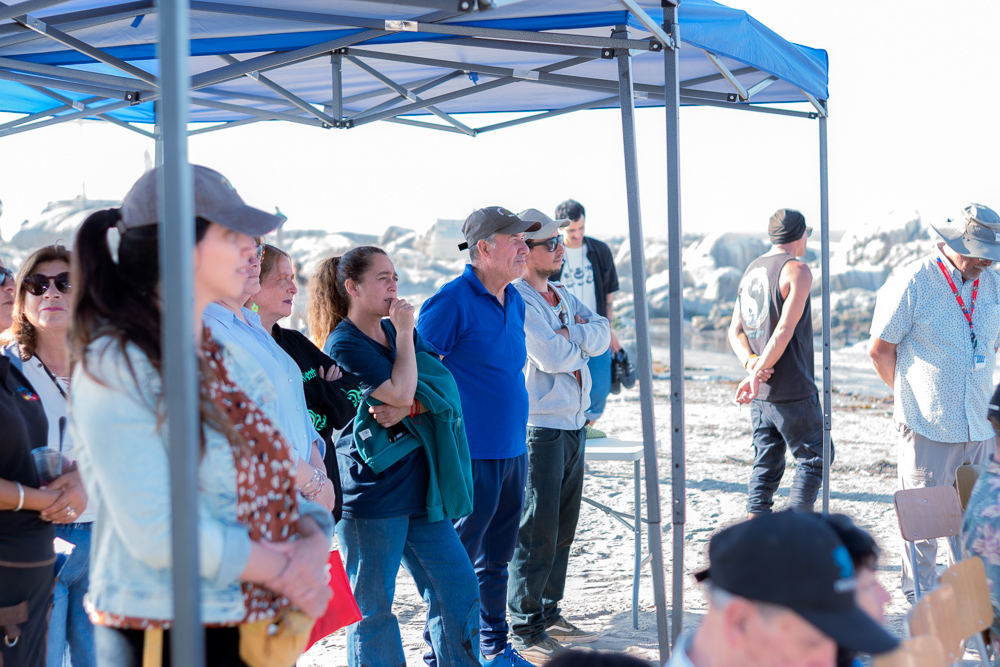
“In a way, the mural makes it possible to bring out certain memories and biocultural heritage through the arts and the cove’s local knowledge. It also sparks conversations with people walking by, going to the beach or heading to the rocks. It’s a bridge to discovering other species that are there, even if we often don’t see them, and to understanding the importance of caring for that TURF-Reserve,” adds Javiera.
Today, when the boats return from their work at sea and enter the cove, they are greeted by this mural facing the ocean. At times it seems to hold a silent, unspoken dialogue with what inspired it. As a work of art, the mural is also education and culture: a channel that conveys the customs, values and practices of a group that has taken decisive steps toward conserving part of its TURF.
“We live in a habitat where there are inhabitants who are our neighbors; we coexist with those neighbors, animals and algae. So we need to find ways to build caring relationships so that the TURF-Reserve can be preserved,” reflects Javiera.
Jorge stresses that “the message is for people to help us conserve, for this to be part not only of the union but of the community. For people to explain to others that this place is being cared for, that they shouldn’t go in and take things, that they should help us take care of it.”
Changa likes to imagine the mural as a teacher, someone telling you about the biodiversity of the place, about the interrelationships between species, human and non-human. It is a testimony that, with identity and a sense of belonging, and without uttering a single word, seems to be teaching us a lesson about a legacy for the generations of tomorrow.
RELATED NEWS