With the sun breaking through the clouds on a cold autumn morning, representatives of artisanal fishing organizations, public institutions and NGOs gradually arrived. With curious faces, they filed into the Senior Citizens’ Multipurpose Hall to take part in the seminar “TURF-Reserves Academy for Ancud: Voluntary Protection Zones for protection and the importance of larval dispersal of benthic species.”
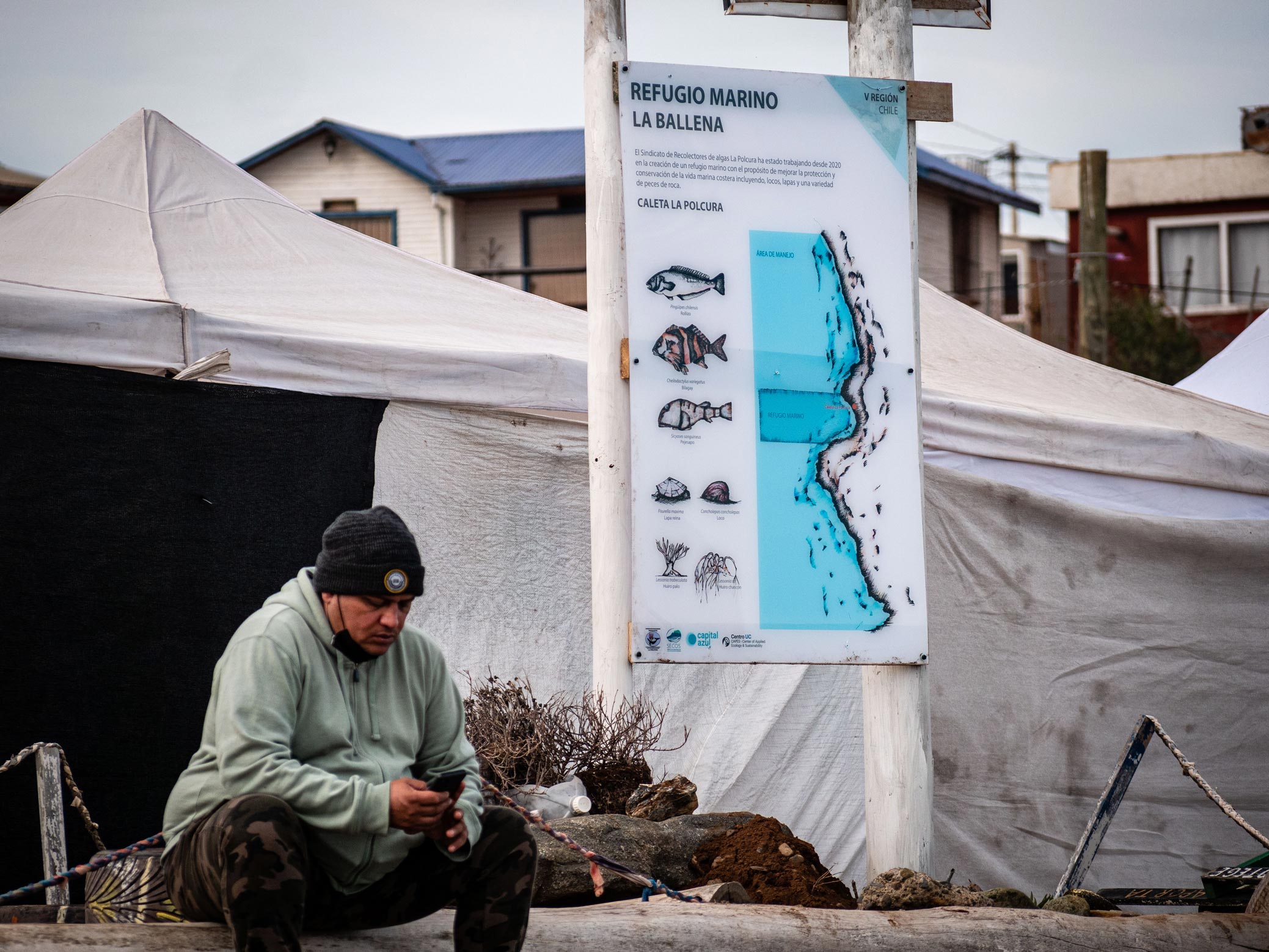
The activity served as a prelude to the launch of the TURF-Reserves Academy, a project led by Capital Azul Foundation that seeks to become a knowledge-transfer hub so that artisanal fishing organizations across Chile, as well as local NGOs, TURF consultants, municipalities and other actors, can implement and manage their own Voluntary Protection Zones, the legal figure under which TURF-Reserves were recognized in the Benthic Law. The initiative builds on the experience Capital Azul has gained over a decade of work in the Valparaíso and Los Ríos regions with various artisanal fishing groups.

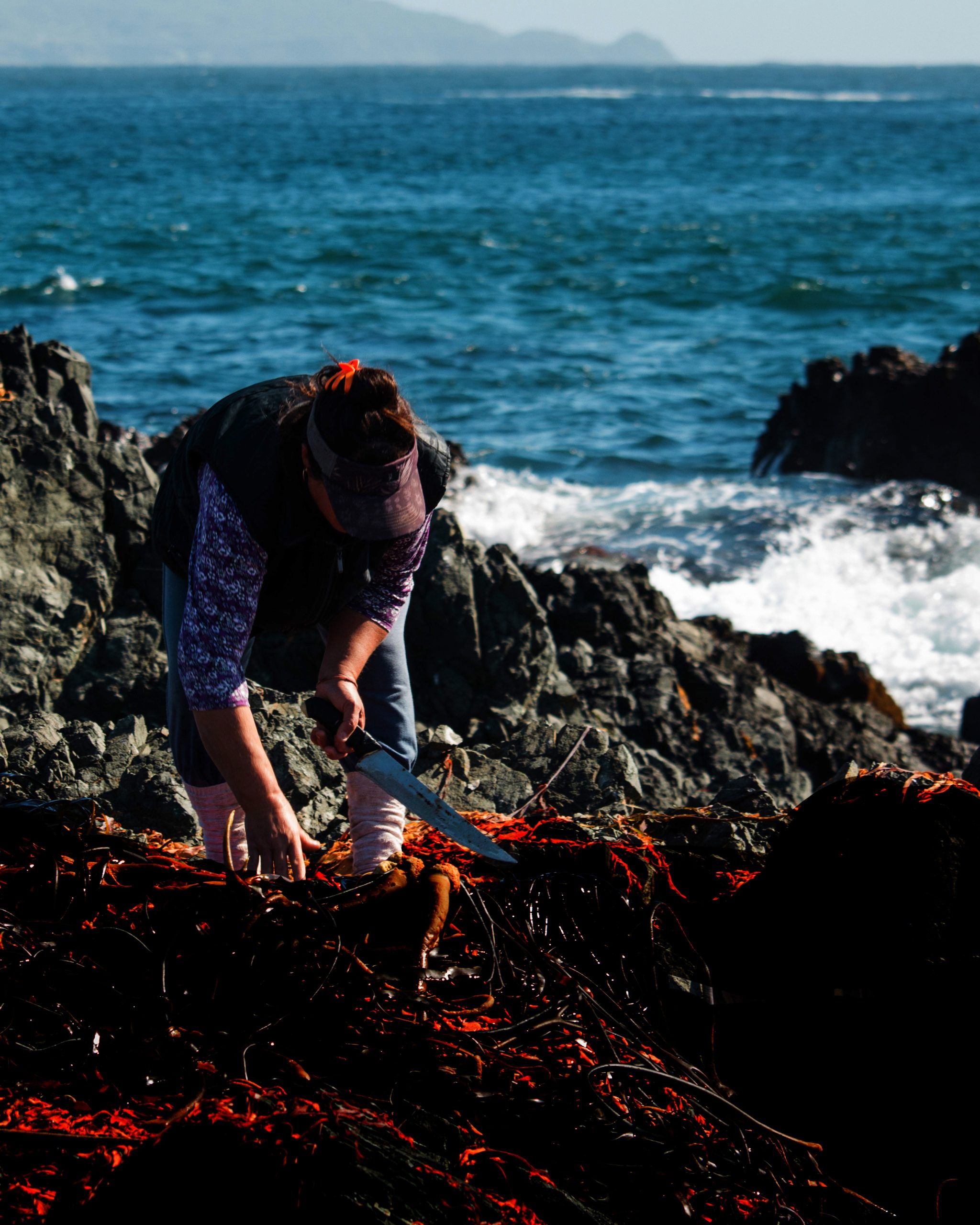
The idea behind this model is to show that sustainable management and conservation are not opposing paths. By voluntarily protecting small portions of TURFs (Territorial User Rights for Fisheries, known in Chile as AMERB), the ecosystem has the chance to regenerate and the larvae of key species such as the loco can disperse, allowing coastal communities themselves to secure their livelihoods and increase their resilience.

The seminar, organized by Capital Azul Foundation together with the Municipality of Ancud and with the collaboration of the GEF Incentives for Biodiversity Conservation Project, brought together nearly 50 attendees from 31 institutions, 18 of them artisanal fishing organizations from Ancud. It opened with a presentation by Catherine González, a researcher at the Fisheries Development Institute (IFOP), on the larval dispersal of species such as the loco, discussing how this connectivity could become relevant if a network of TURF-Reserves were eventually created on Ancud’s west coast.
The voice and knowledge of artisanal fishers also played a leading role at the event, with a lively presentation by Sergio Veas, president of the Zapallar Fishers Union, and Rodrigo Sánchez, Executive Director of Capital Azul Foundation, sharing firsthand the experience of implementing the Zapallar TURF-Reserve as a space that goes beyond restoring biodiversity, strengthening community ties and diversifying opportunities for coastal communities.


For Capital Azul Foundation, this milestone is a first step toward taking TURF-Reserves beyond the Valparaíso and Los Ríos regions, now with a different strategy that builds local capacity so that artisanal fishing organizations can implement TURF-Reserves on their own. A new stage is opening in which TURF-Reserves could eventually reach every district and region of Chile.
Rodrigo Sánchez
Executive Director, Capital Azul Foundation
Sergio Veas highlighted the path the Zapallar Fishers Union has traveled since 2020 to be at the forefront of TURF-Reserves: “There’s a lot of work behind this from our union, and the fact that today we can show in another place what we are doing in Zapallar, and that they want to replicate it, shows that we are doing good work. You can see that in Ancud they are very eager to innovate, to do new things with the unions, and that matters.”

The seminar also featured a talk by José Valencia, marine coordinator of the GEF Incentives for Biodiversity Conservation Project. He discussed the regulations that could open up a series of funding opportunities for initiatives such as TURF-Reserves through three economic instruments expected to be launched soon, including payments for ecosystem services and biodiversity offsets. This trio of tools could create a virtuous scenario in which conserving these Voluntary Protection Zones becomes an attractive option for artisanal fishers, allowing the model to scale nationwide.
The final session of the seminar featured the panel “TURF-Reserves in Chile: challenges and opportunities at the local and regional level,” where Rodrigo Sánchez and Sergio Veas were joined by representatives of the Center for the Study and Conservation of Natural Heritage (CECPAN) and the Mar Adentro de Chepu Fishers Union, who are pioneers in implementing a TURF-Reserve in the Los Lagos Region with support from the GEF Incentives for Biodiversity Conservation Project.

“I think this TURF-Reserves Academy is a great opportunity for colleagues who have these TURFs, perhaps not only for loco but also focused on other resources such as macha clams, perhaps Chilean oysters, and other resources that can regenerate,” said José Miguel Villarroel, president of the Mar Adentro de Río Chepu Fishers Union, adding that TURF-Reserves will bring benefits “also to open-access areas or other TURFs that will benefit from larval dispersal.”

Raúl Riquelme, a specialist in the artisanal fishing and aquaculture section of the Municipality of Ancud, stressed the importance of this initiative for a district that, as he explained, accounts for a significant share of the loco quota in the Chiloé province. “It opens an opportunity for artisanal fishing organizations that voluntarily want to opt for this, so they can move along a path of sustainability and new opportunities for the social and economic development of the different coastal communities,” he explained.
We believe this is an opportunity that could help precisely with the productivity of TURFs, and of course with the growth and maturity of the different artisanal fishing organizations that join this TURF-Reserves Academy with Capital Azul Foundation.
Raúl Riquelme
Municipality of Ancud
This seminar marks the starting point of a transformation for Chiloé’s sea territory ahead of the official launch of the TURF-Reserves Academy, which will take place in the second half of 2026. With this major milestone on the horizon, science and coastal communities are beginning to move together toward a sustainability model capable of generating tangible benefits not only for marine biodiversity, but also for the livelihoods and lives of all the families who depend on and enjoy the sea every day.
RELATED NEWS